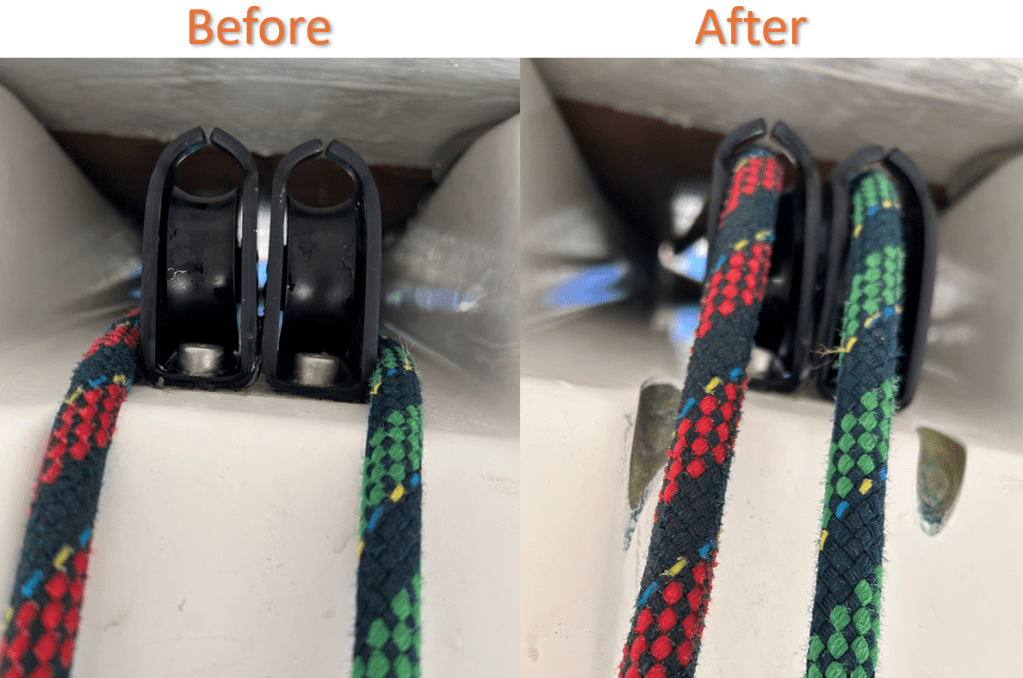
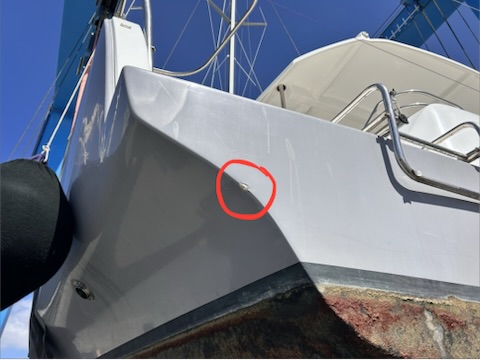
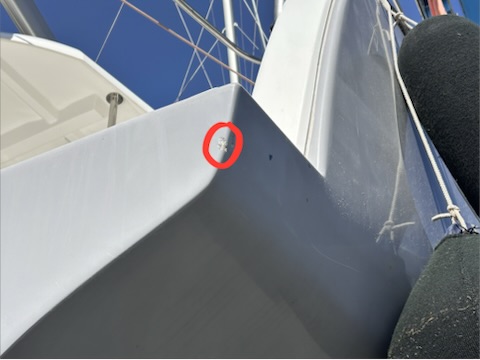
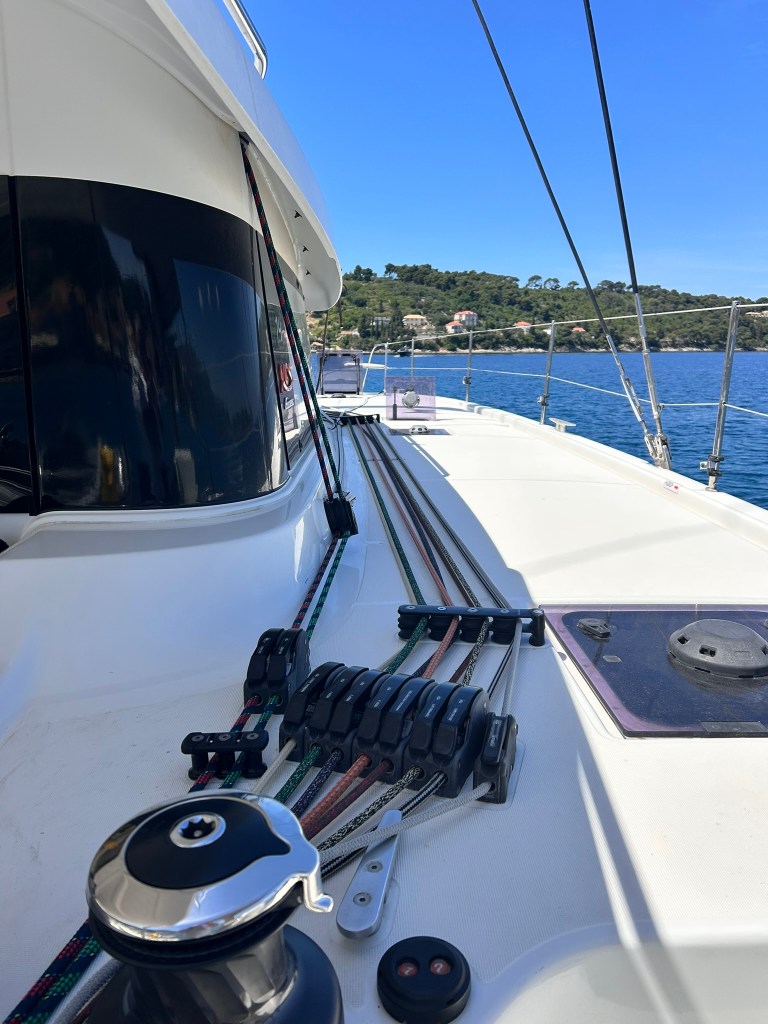
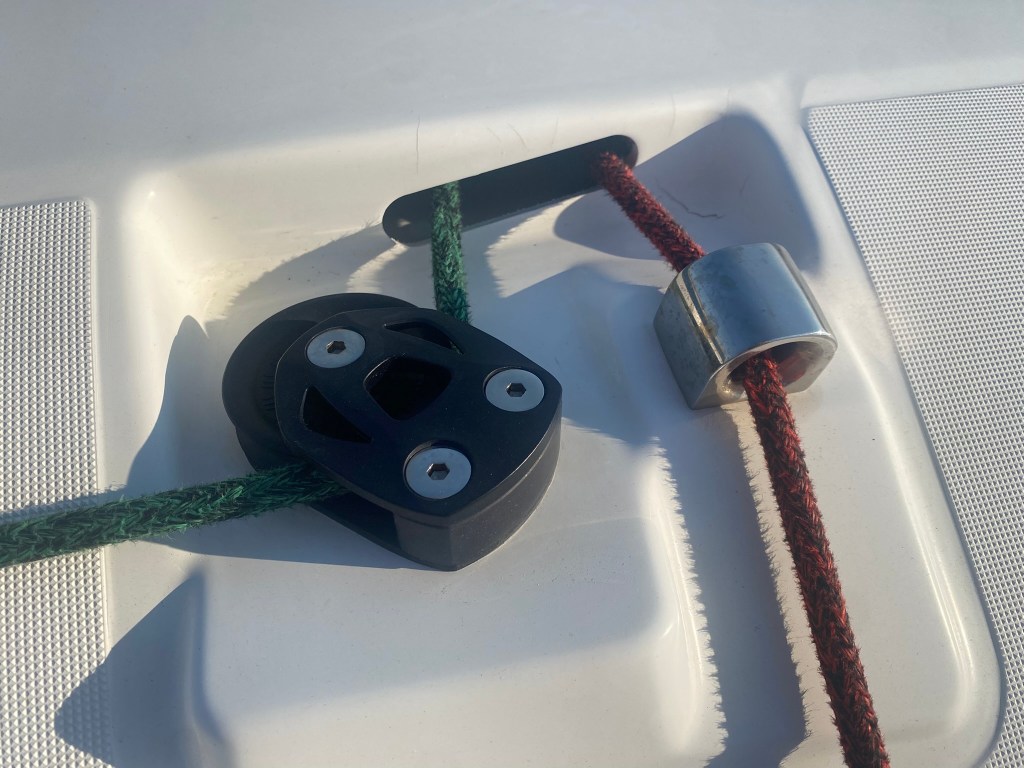
It was a simple task while under sail. Mark the jib sheet with some whipping line for trimming the port side jib sheet. I pulled the jib sheet out, marked it, and when I went to guide it through the blocks, I found new groove marks cutting through the hull.
At this point, so many things became obvious. The white dust that was on the sheets when we left Cyprus. How trimming seemed more difficult when pointing high. The signs were there that something was wrong, yet I justified them with other explanations and didn’t explore or verify them. Which conflicts with a motto I use when teaching: “Prove it’s not screwed up”. I failed to prove the lines weren’t screwed up, so…
What Happened
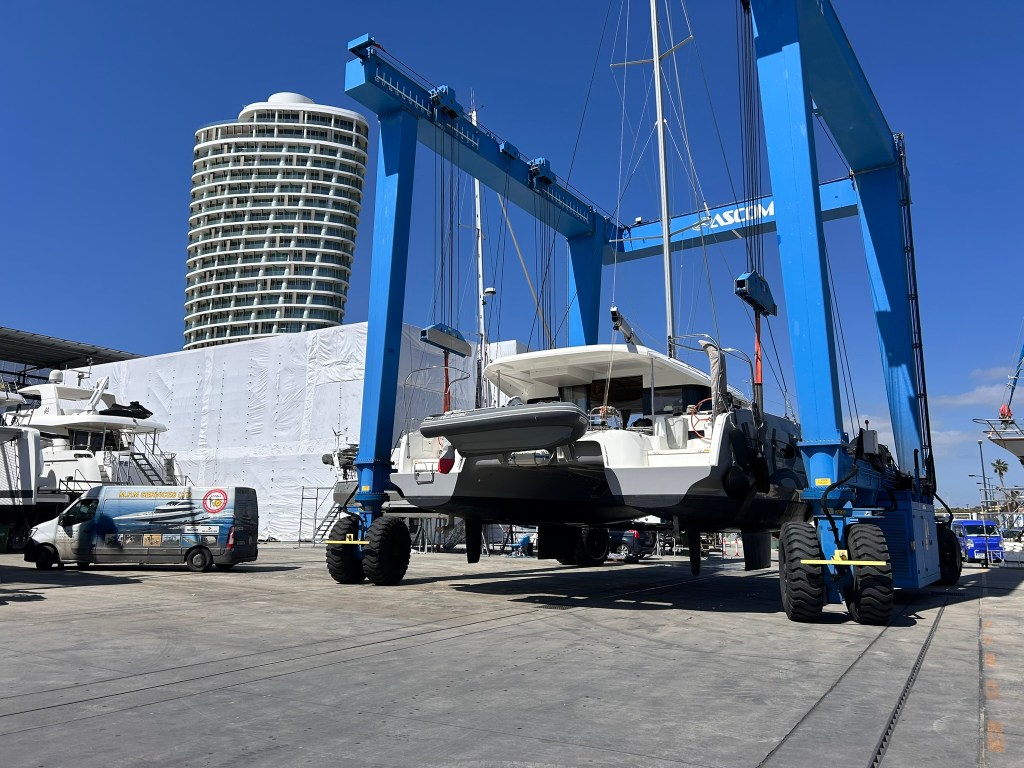
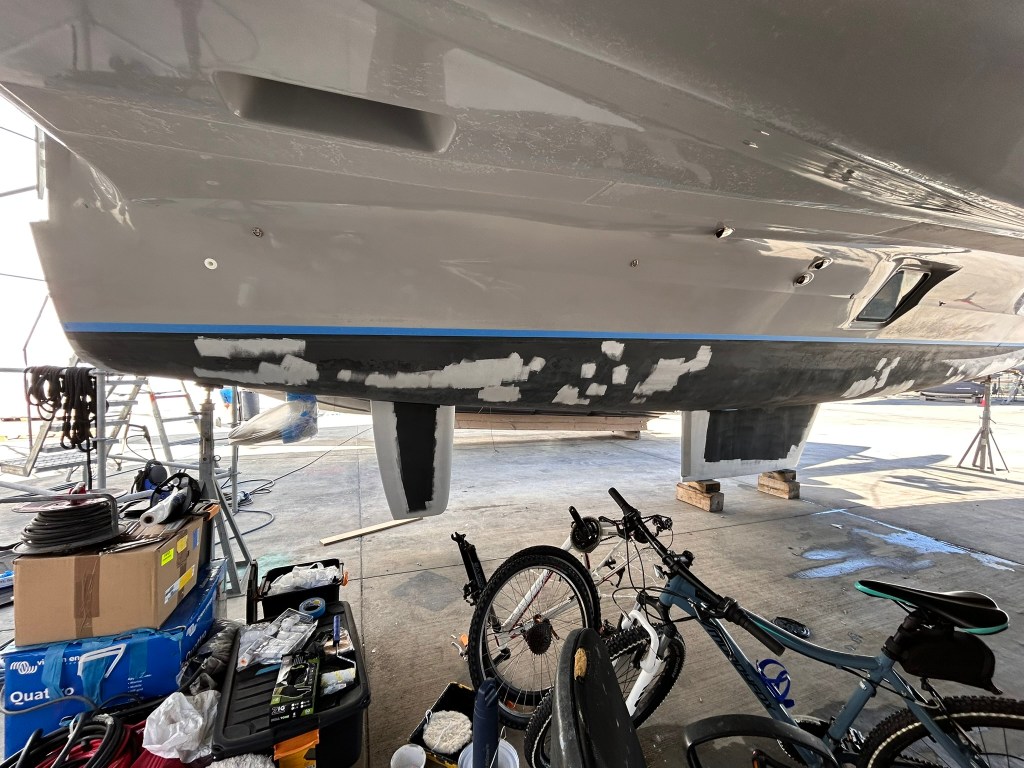
Back in March, when we started the season in Cyprus, we were on the hard for some repairs. In addition to other work, I had some gel-coat work done, and I had the yard complete the work as I wasn’t yet comfortable with gel-coat and fiberglass repairs. There were repairs below the water line that I didn’t have a chance to fix if done wrong. So, I hired some professionals.
There were some minor stress cracks at the top of the roof, where the jib sheets come down to the deck. I had asked the person to remove the sheets before sanding the spot. When we were done for the day, I never saw them remove the sheets, so later, when I saw dust on the sheets, I ass-u-me-d it was because they didn’t remove the sheets before sanding. That was back on April 10th, in Cyprus. It was now May 17th, and we were in Montenegro. Over a thousand miles, and many tacks later.
After seeing the damage, I realized the white dust wasn’t from sanding the repair. It was from the jib sheets “sanding” the gelcoat. The jib sheets were literally cutting through the boat. When the white dust stopped, I assumed it had just washed away. However, the white dust stopped when the lines had sanded through the gelcoat and into the fiberglass.
Missing the blocks is an obvious mistake. When you drop the sheets down the hole, it’s not clear that there are blocks within the roofline. The lines come out of the roof, and they run through the turning block to the clutches. Unless you know to look or are proactive in checking, it’s an easy miss. But…
Who’s To Blame
As I realized what had happened, I went through the history of events that led to this. Did I change the sheets? Should I be upset with the worker? Sure, I could, but all boats are different. I was using the yard workers who are working on multiple boats, context switching between boats as the fiberglass and gelcoat cure. But here I am, thousands of miles away, with a boat that was rigged incorrectly and no place to replace the lines. Several other items were also improperly configured after work was completed. Do I call them and complain, and ask for “warranty work”, 1,200nm away?
At the end of the day, we’re all human, and mistakes happen. It’s our boat, and it’s our responsibility.
It’s another lesson to double-check all work done and know what was done and what was touched, so you know where to look. If someone is working on your boat and isn’t either volunteering the areas they worked on or is happy to provide the details of what they did, that’s when you should be concerned. Anyone working on a boat should know the challenges we face at sea and the problems that will arise. They should recognize that they are also human and may make mistakes, and it’s more important to be helpful than to be defensive.
As I sorted through the damage, I wasn’t upset; I took it as a lesson. Most importantly, I realized it was my fault for not checking, for not looking more closely when the signs of dust and some difficulty with trimming were showing. Everything is a clue to be explored and confirmed. It took all of 2 seconds to stretch and look under the roofline to see the lines weren’t run properly, and it would have been easy to fix, as soon as I saw the dust or felt more difficulty trimming the lines than I remembered from the previous season. The first clue was just an hour after getting splashed back in the water.
The Damage and Durability of Lines
This is the most interesting part. The hull has some new smooth grooves, which make the boat just a wee bit lighter. There are no holes, so there’s no risk of leaks, and the grooves aren’t deep enough to weaken the blocks’ mounting points.
What was really impressive was that the jib sheets showed no signs of wear. These are the third set of jib sheets we’ve had on the boat. The stock 12mm jib sheets blew in the first two months. They were polyester cores, and there were no signs of wear on the cover. At separate times, they each blew at the exit of the jib car while trimming under 20+ kits of upwind sailing. The 2nd sheet was a discontinued 12mm Dyneema Liros line I decided to test, which shredded at the cover through the clutch. The core was fine, but the cover didn’t last more than a week. It reinforces the differences in the types of lines, their cores, and their covers.
The Liros lines were more durable than gelcoat and fiberglass. Apparently, I could have sawed the boat in half before the Liros Regatta lines would have failed. That was impressive.
Who’s Responsible for Your Boat?
Someone needs to be responsible for your boat. The question is who, and does the “who” match your sail program?
Every boat is different. Even the same year/make/model has differences from the manufacturer, and then there are all the customizations. Customizations range from rigging and electrical systems to where things are stored and what parts and tools you have aboard. The person who’s responsible must know your boat, your configurations, your spare list, and how the boat will be sailed to know what should be monitored more frequently and what spares you should have aboard.
Home Ports and Seasonal Cruising
If you’re a weekend sailor with a home port, you have some options. You can pay someone to be responsible for your boat. The key is that it needs to be a single person who knows your boat, your plans, and your spares. They can prep the boat at the end of the season, order parts, and do repairs over the winter or in the spring for the next season.
If you’re a seasonal sailor who departs from a port at the beginning of the season and won’t return until the end of the season, your options are limited to having someone aboard. That may be the owner, or you may need to hire a captain or a competent crew to monitor and maintain your boat. If you’re not regularly heading back to a port, you really need that person with you. Things break all the time. Or, you discover they weren’t configured right at the last repair, and now you have a problem to cope with.
While sailing across the Mediterranean, I was asked what the most challenging thing was. They assumed that it would be the weather. While the weather and the Aegean Meltemi are a challenge, it’s easy to see it coming, and relatively easy to duck into an island and hide for a few days. The most challenging things are having the right parts aboard and knowing how to get the ones you don’t have but need now. The other challenge is having a great crew, but that’s a different article.
Explore All Clues
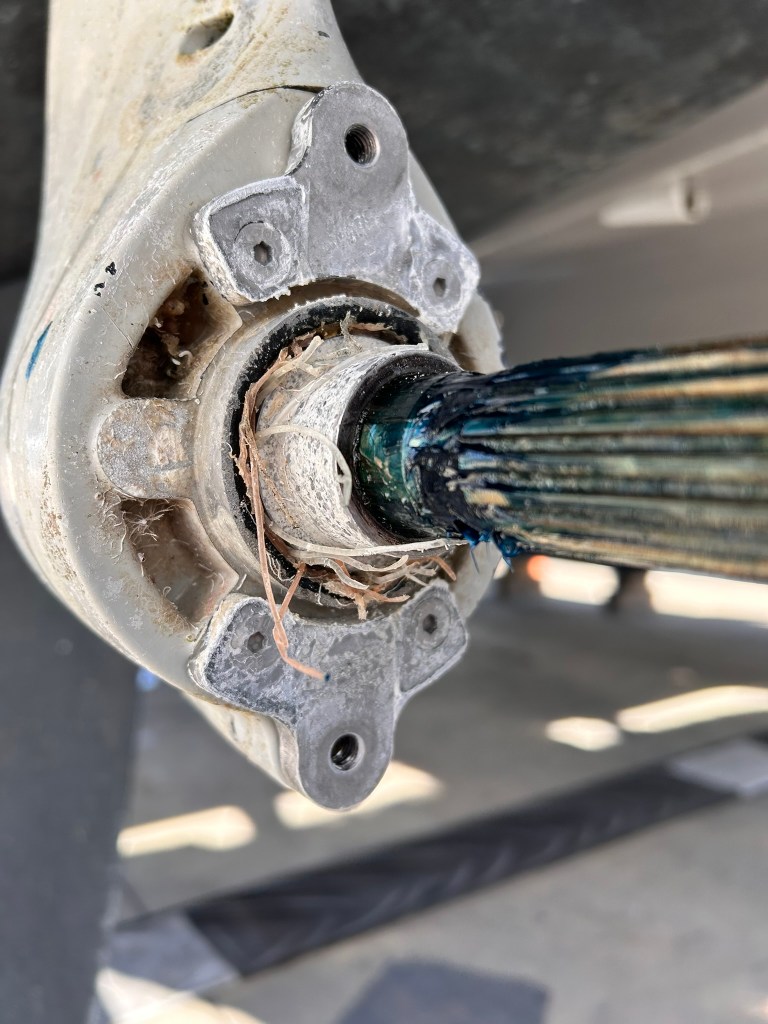
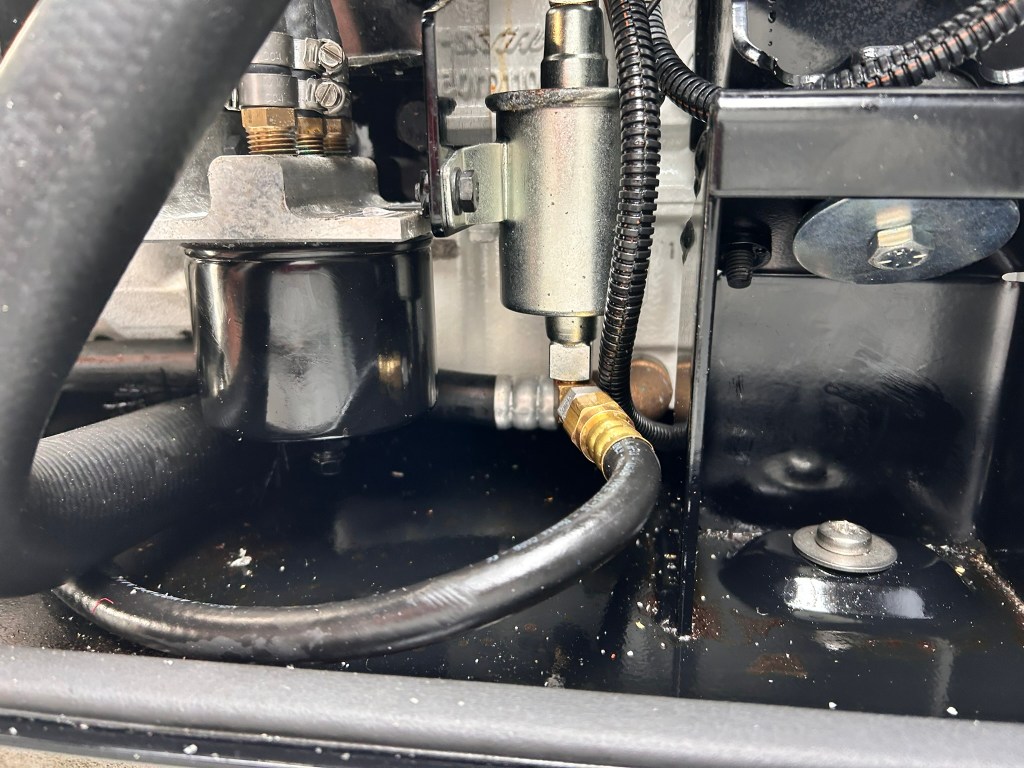
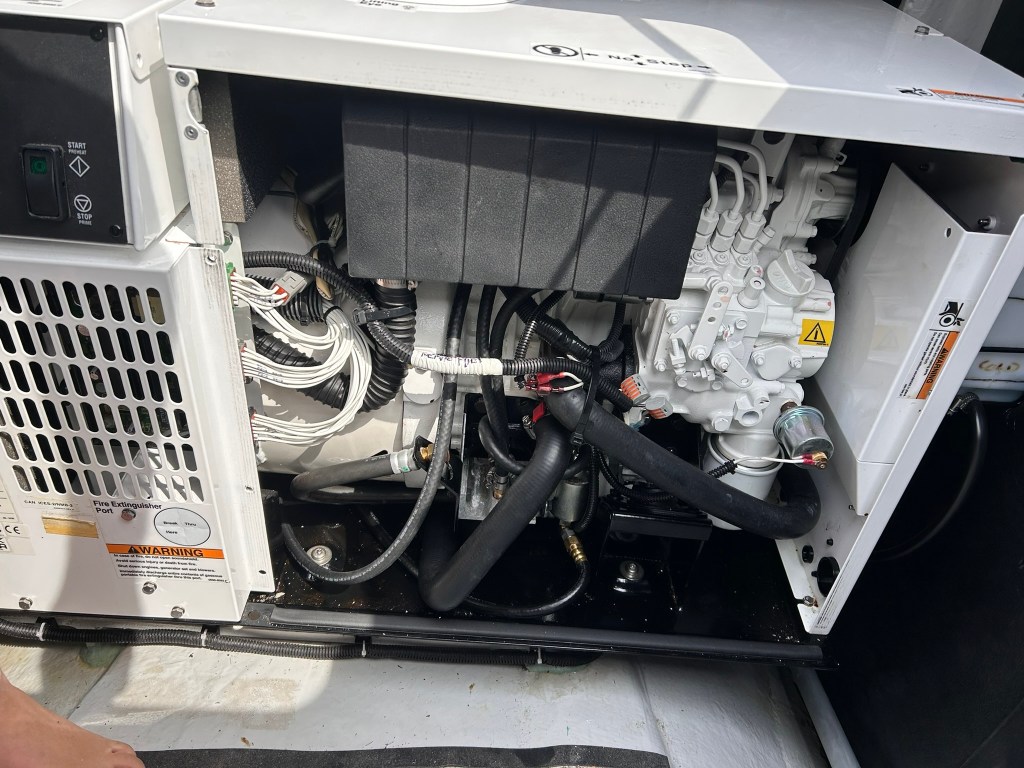
As I was writing this article, I heard the bilge pump run. It wasn’t raining, and I’ve heard it a few times. Previously, I found some diesel coming from the genset area and at the bottom of the genset soundproofing box that I had cleaned up, but knew I needed to monitor. So, I stopped editing and did some splunking. The only thing I could find was that the fuel line that enters the fuel pump swiveled. I had assumed it was designed to swivel. A little more exploration, running the genset for a bit with a paper towel under the fitting, I realized it was NOT supposed to swivel and had simply come loose. An hour later, after disassembling the bracket, it was tight and repaired.
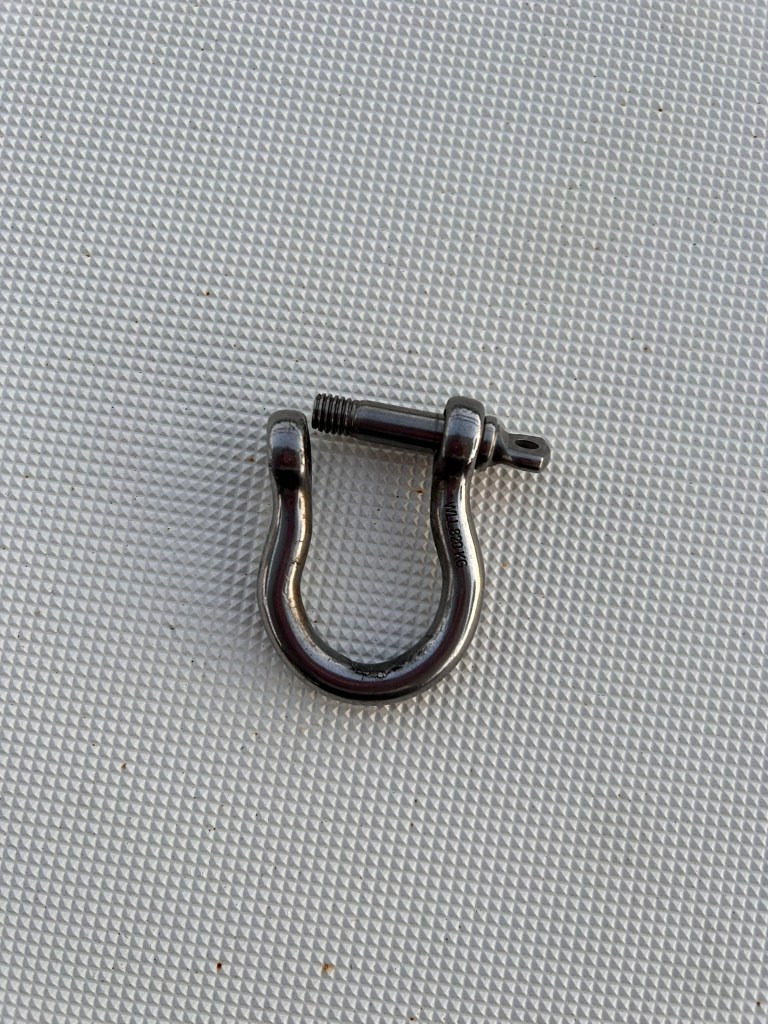
Then, as we moved from one anchorage to another, we tacked in 22 knots of wind, and boom, the tack of the main appeared to have blown, and we now have a tear in the first bungee point to the mast. What happened? The screw of the shackle had backed out. We have new crew, and to avoid overwhelming them with tons of details, I didn’t ask them to check it each time. I intentionally didn’t put a safety in the shackle because I didn’t want to tear anything up, and it’s easy to check each time if you know how. Again, my fault for not putting a safety in place, not briefing the crew to check each time, and not occasionally checking it myself.
Nobody to Blame but Myself
I guess this is why my instinct wasn’t to get upset with the yard worker or anyone else. We’re all human; he was doing his best, and mistakes happen. Ultimately, anything that’s wrong with the boat is the captain’s responsibility. I should have checked his work. I should have seen the warning signs to “prove it’s not screwed up”. At the end of the day, I’m the one floating across the sea, responsible for my crew and the condition of the boat. So, it was my responsibility, and I had nobody to be upset with, besides myself. I no longer make excuses for assuming shackles are obvious to check, and all will have safety wires.
 Hull Yeah!
Leave a comment