Excess 14 Spares
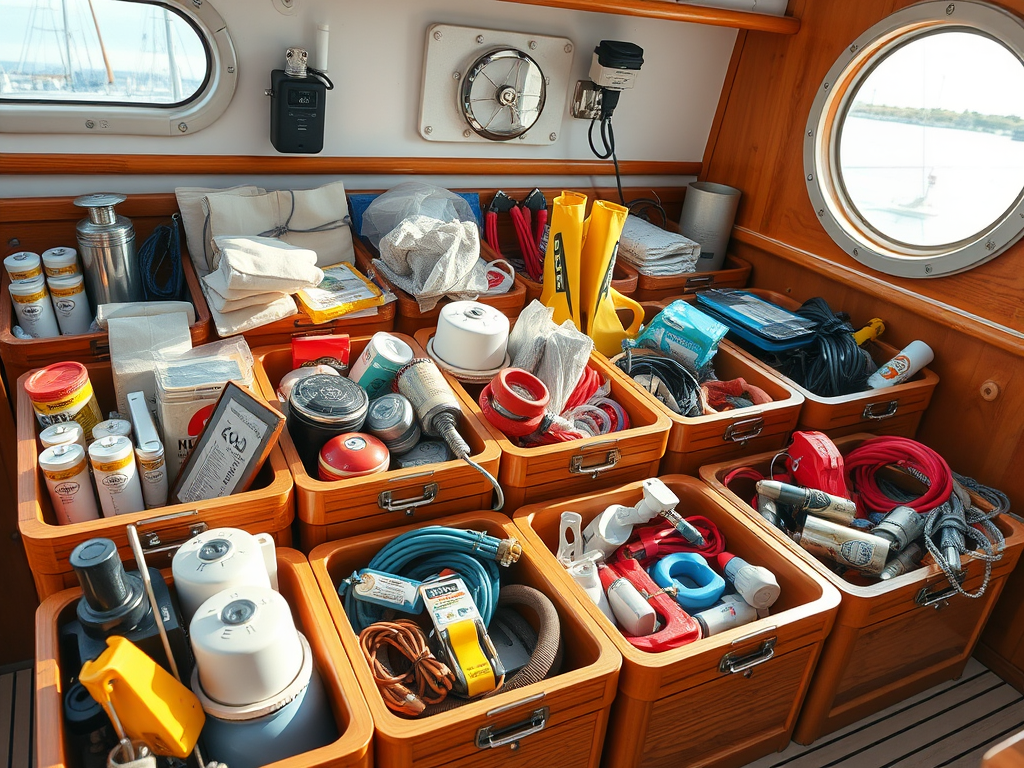
Whether sailing locally, across the Mediterranean, or doing an ocean crossing, there’s a set of spares you’ll want to have aboard. From our experience cruising the Mediterranean, getting parts is a major challenge. We were able to consistently find shackles, but that’s about it. From blocks to quality replacement lines, we struggled, resorting to mules (friends) bringing them from deliveries made to their homes.
Below is the list of stuff we’ve started to accumulate as spares kept aboard. We wish we had this list at the beginning of the season.
Safety/Prevention
- Sump Pump: We happen to have Sahara 2 S1200, but confirm you have the same.
- Portable 12v sump pump with enough pipe to run from the furthest place on the boat, overboard. Also, make sure you have enough 12v cigarette lighter cord to run from the inside helm station.
- Sump Pump Backflow/Check Valve (1″ with extra barbs, as you’ll need quite the wrenches to undo the factory glued-in barbs). When these fail, the sump pump will continually cycle as the pumped water into the pipe is just enough to trigger another cycle. This can burn out your pump, so always listen for those different sounds.
Lines
The Excess 14 can handle strong winds, gusts and waves, but the stock lines can not.
Initially, I debated whether lines should be “the fuse” to keep the sails and other parts from failing. Over the season, we’ve had too many lines fail, which can cause far more damage, so all new lines are Dyneema core, and lines that go into the clutch, consistently at the same point (jib & halyards), get Technora covers. We’re also experimenting with the Spinlock ceramic-coated cams. The combination has made a huge difference in our confidence as the Meltemi comes.
Stock Lines
From the Excess Manual, here’s a quick reference, with a few notes(*)
For direct replacements, consider getting 1m longer, as you can cut the 1m off, shifting the routine wear marks, extending the line for another season.
I’ve also added a column for what we’ve replaced the factory lines with. In some cases, like the sheets, the diameter is slightly smaller as the replacement is a Dyneema core and Dyneema inner cover for extra strength (Liros Racer.
I’ve also chosen different manufacturers to have different colors or different qualities for the specific application.
| Rope | Factory Length (m) | Factory Diameter (mm) | Replaced With |
| Mainsail halyard | 65 | 10 | Marlow D2 Grand Prix 78 10mm |
| Mainsail sheet | 45 | 10 | |
| Mainsail topping lift | 47 | 10 | Liros Herkules Vision 10mm |
| Reef 1 | 29 | 12 | Gleistein Jammer Twin 12mm |
| Reef 2 | 40 | 12 | Gleistein Jammer Twin 12mm |
| Reef 3 | 38 | 12 | Gleistein Jammer Twin 12mm |
| Mainsail control lines (traveler) | 21+ 17,5 | 8 | |
| Mainsail control lines (flatwinder) | 16.70 | 10 | N/A |
| Genoa halyard | 44 | 12 | |
| Genoa sheet | 17+ 13 | 12 | Liros Regatta 2000 12mm |
| Spinnaker/Code 0 halyard | 70 | 10 | Marlow D2 Grand Prix 78 10mm |
| Spinnaker/Code 0 sheets | 2 x 29 | 12 | Liros Racer 10mm |
| Spinnaker/Code 0 tack | 10 | 10* | 20m of the original main halyard to reach back to the starboard helm station. |
| Dinghy Davits | TODO | 8 |
* The stock Spinnaker tack is short, with the clutch at the bow sprit. If you replace wiht a longer line that reaches back to the helm station, you can let the tack out in deep downwind conditions, using the winch to pull it in as you turn upwind.
List of Lines We Keep Aboard as Spares
The rule of thumb we follow:
What are the minimum spares we need to survive several weeks, and still use all our sails.
When we lost our main halyard from a blown cover in the clutch, we realized not having spares would be a huge problem for the crossings we had planned. We used our Code 0 halyard until we got a replacement.
The other logic is that we know we’ll need to replace all the lines at some point. By keeping a full set aboard, we have all the spares we need, and we’ve bought them at a likely lower price than when we will swap them out.
- Code 0 halyard, which also covers the Main Halyard
- Jib sheets
- Reef 2, as it’s the longest of the 3 reefing lines
- 80m of 8mm, Dyneema core, for various things from dinghy davits (overkill), to the main sheet
- 5mm black bungee cord for the main sail.
- Deck safety lines are a likely item for the list. They’re small enough you may not have it when you need it most.
- Dyneema Chafe Cover (4-10mm) – slippery, not for gripping in a clutch
Cover the reef lines, then enter the leave the mast, go through the tack friction ring, enter the boom, and go through the clew friction ring. - Whipping supplies
- Spare Main Sheet Fuse: A new Excess typically comes with 2 spares, and the one already on the main. We were surprised to have ours blow while on an upwind sail.
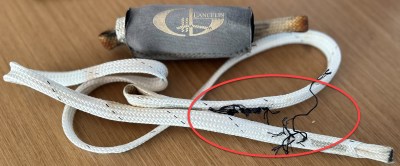
While replacing it, it blew off the roof and started floating away. A quick dive, and it was saved, but it speaks to having only 1 spare. We keep two spare main sheet fuses aboard, which we’ve had to purchase through Excess.
The alternative view is to keep a minimal selection, where some lines can double as others. For instance, the topping lift can double as two Code 0/Gennaker/Spinnaker sheets (if a Dyneema core is used).
Sail Parts
Battens: At the end of the season, while removing our main, we found one of the battens had splintered. It wasn’t completely broken, so it wasn’t obvious while the sail was flying. Having a spare is a challenge, as to where would you keep it?
The stock battens are 16mm fiberglass. The sail bag has two sets of shorter fiberglass rods with couplings. (Similar to tent poles). You could order one or two 16mm battens and store them in the sailbag, replacing the shorter ones. Then, if you need them, pull it out, cut to length, and use the stored stock shorties to put the saibag back together.
For the 2026 season, we’ve ordered carbon fiber battens. We’ll see how this works out as they need to convert from a rectangle to rounded ends.
Batten Plugs: At the leech of each batten is an adjustable plug that sets the tension on the batten. These have been known to come out, as well as the screws that hold the batten pockets in place. I don’t yet know the part # or where to get them. If someone has it, please let me know, and I’ll update here.
Mast / Boom Parts
The mast is from Sparcraft, which is owned by The Wichard Groupe.
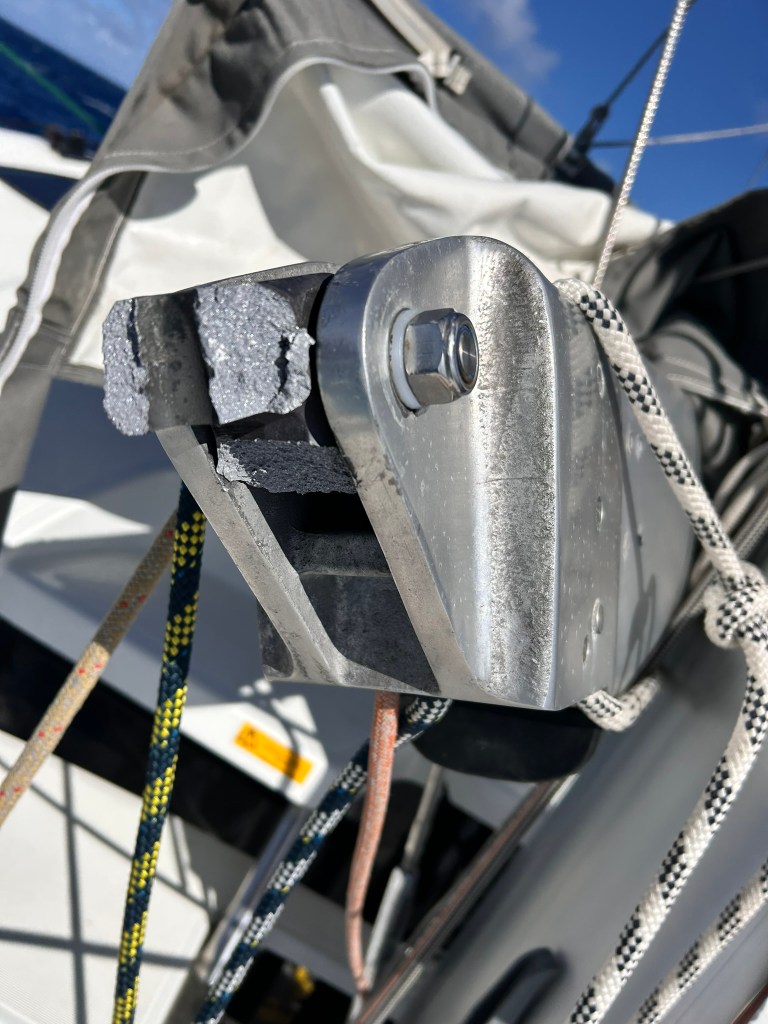
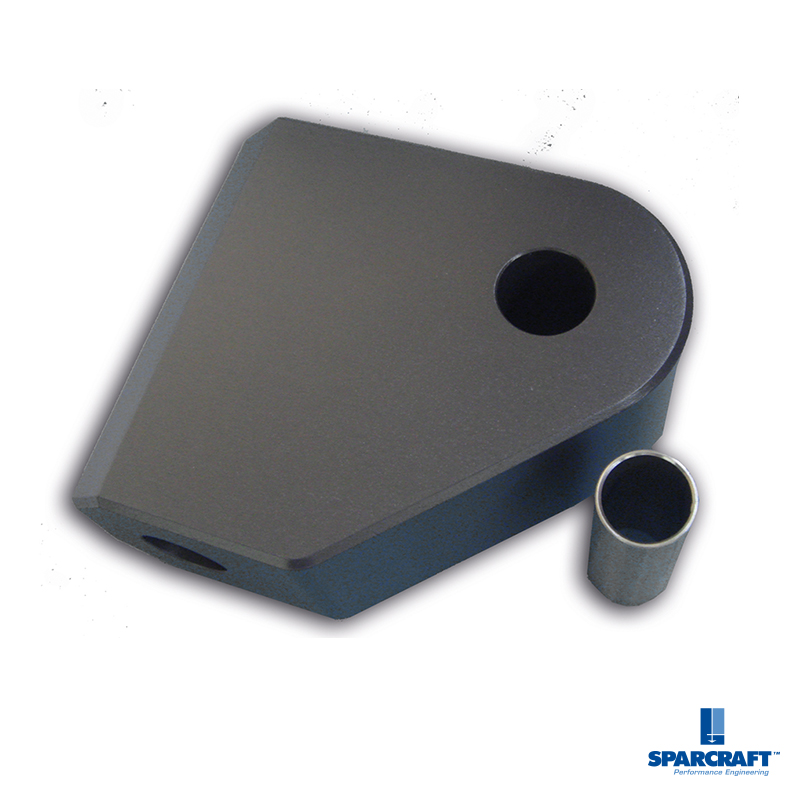
Gooseneck: Sparcraft Gooseneck Toggle F1700-F3400 – S830-S2100 Milled Aluminum
On a crossing in 2025, we had the unfortunate loss of the gooseneck. (See here Archimedes Single Line Reefing) The stock gooseneck toggle is cast aluminum, making it quite brittle. The newer replacements are milled aluminum, which is much stronger. I’ve ordered a replacement and will be swapping ours out as a preventive measure.
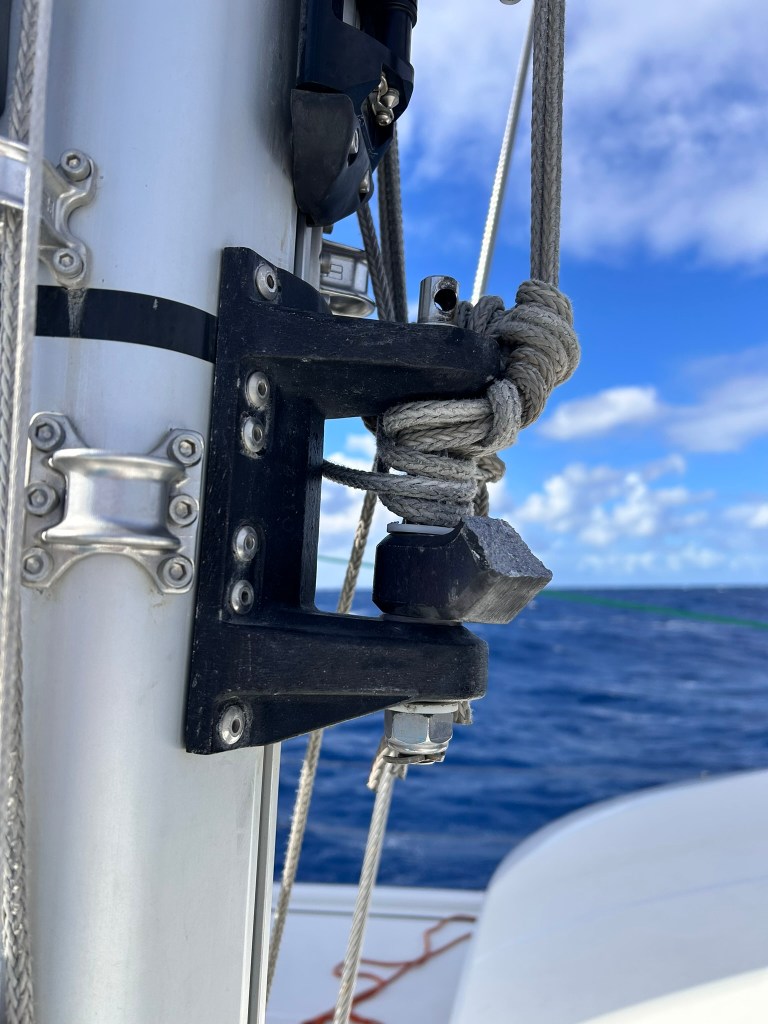
Main Luff Cars: If you need to remove the sails, you can pull the pins on the cars. However, it is possible to remove the cars by removing the track at the bottom of the mast. The problem is that each car has 80 Torlon ball bearings. If you’re not careful (ask me how I know), they will spill out like an old bubble gum machine.
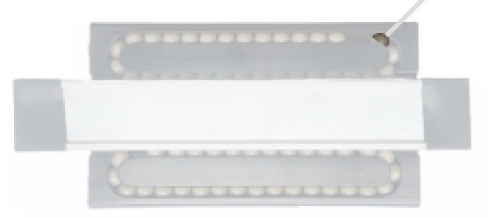
These are Facnor part #: 51326300020, Facnor is also part of the Wichard Groupe
Topping Lift Sheave: We found the small plastic sheave to be worn through. We had new sheaves made from Delrin and a brass collar. I’ll post the details when they’re installed, and I’ve confirmed the larger size fits and functions. But check your topping lift sheave; it’s likely worn and not spinning as it should.
Unique to Excess
There are a few items that are either unique to Excess or difficult to find, so you might as well get them from Excess.
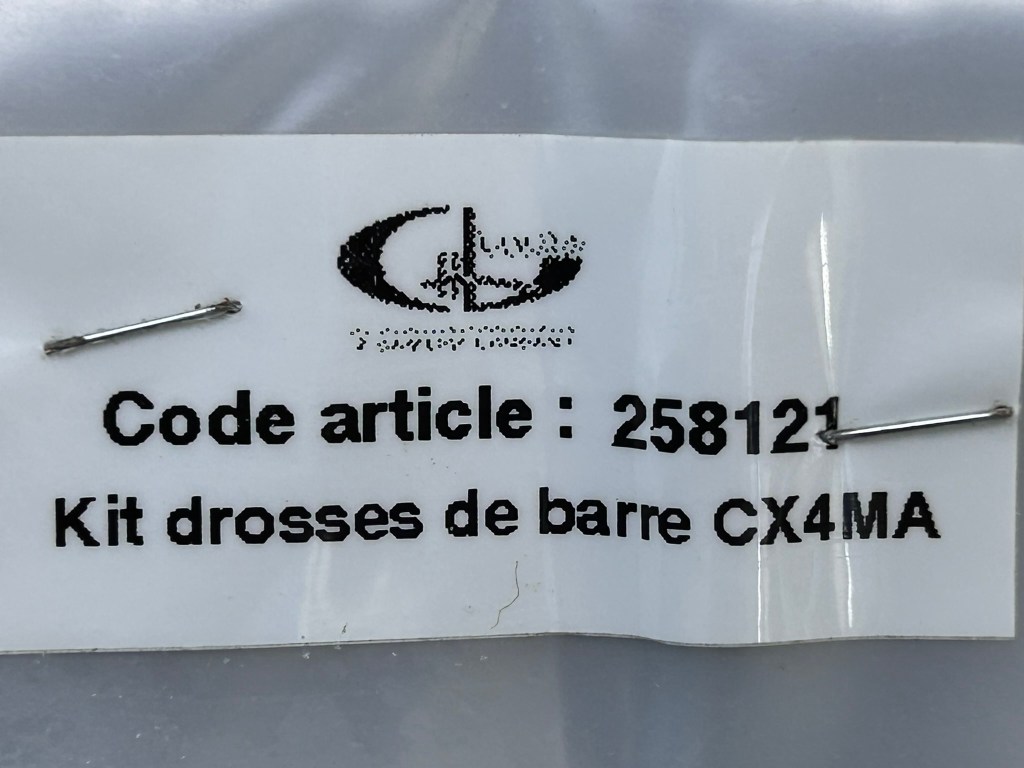
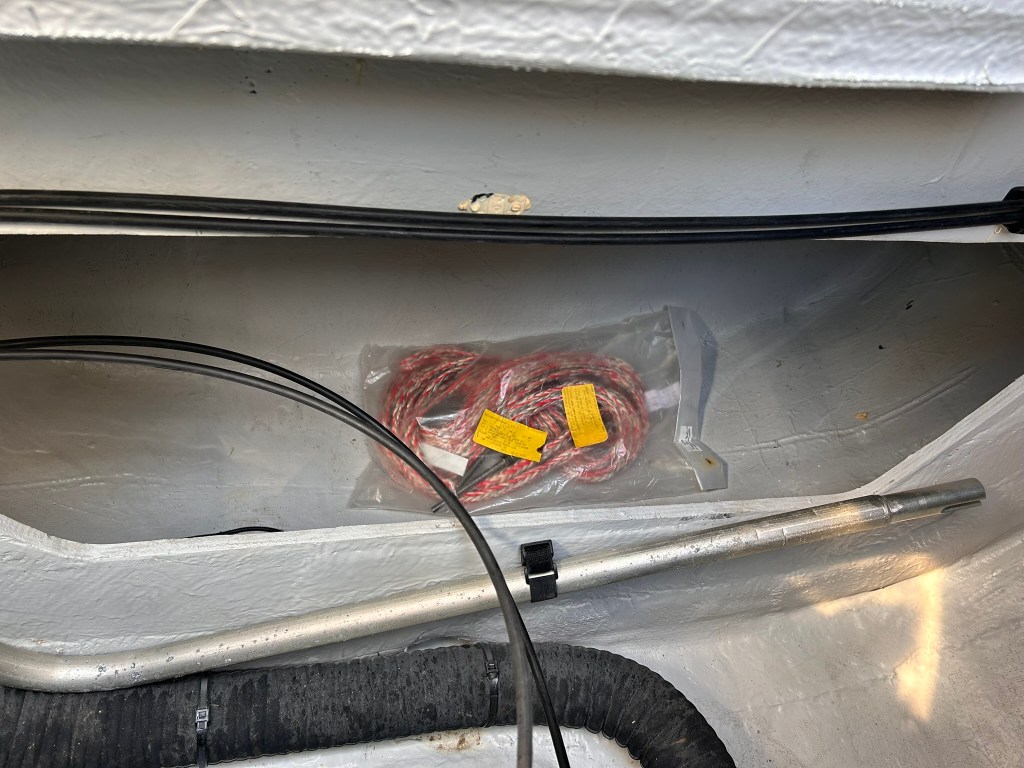
- Spare steering dyneema line
We’ve noticed sme chaffing, and this is not something you want to suddenly be without. We just tossed a spare in the rear of the engine bay, hoping to never need it. But if we ever do, it will be the best decision we ever made.
The Factory part # is: 248121
As PJ points out, you can create this yourself, with equivalent Dyneema cable, adjusting the turnbuckles to the proper tension - (2) each – Bow navigation lights (Port & Starboard)
We were navigating the Old Evipros Bridge, which requires you to wait until it opens due to the current. At 3:30am, we were woken up by the radio saying they were ready for us. We went to lift the anchor and switched from our anchor light to our steaming and navigation lights. The nav light switch was blinking, indicating a blown fuse, …great. A quick check of the wires, and the starboard bow nav light wire just popped off. A reset of the fuse and they worked, minus the starboard nav light. With no spares and no place to find a match, we’re waiting weeks for a delivery from Excess to some location we’ll be in the future. - We lost our steaming light from a jib hit. Excess is sending a new one. As we learn the part number, we’ll likely get another as they’re also pretty unique.
Blocks, Clutches, Winches
- Main Halyard Block
- Main Sheet Blocks
- Spare blocks for things like bypassing the through-deck block for the davits
- Winch handle – have at least 2 aboard, preferably 3.
We recently lost a handle when the bow sprit tack for the gennaker partially closed when dousing with a gennaker sock. With the added tension, the sail was flaling, the sheet whipping at the helm station, and it just happened to catch the winch handle and tossed it overboard. - Shackles – lots of spares as they rust, and they’re relatively cheap,
- Clutches/Cams
We’ve seen wear on the cams, particularly on the high-use clutches like the jib sheets and halyard. If we’re going to replace them, we opted to use the ceramic-coated cams. - Assorted Stainless key rings for safety lines and misc
- Deck Organizer Sheaves: First, make sure you have the Spinlock upgrade to the deck organizers. Unfortunately, it doesn’t include the Antel jib sheet guides.
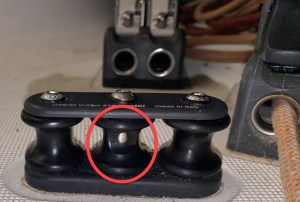
We’ve worn a few of these, and expect it’s a combination of salt buildup and the limited angle the Antel guides provide. I’ve purchased Spinlock TSR30 Standard (tall) sheaves that provide the proper angle from the clutch to the winches. I’ll update with the details when we install them. The holes are slightly different, so we’ll need to fill the old holes with fiberglass, then re-drill new holes.
Electrical
- HVAC Motor Starting Capacitors.
When you want AC, you want it. We blew what we think was already a replacement capacitor. They come in CBB65 (the higher quality ones) and CBB60, the lower quality ones that we had fail. We were able to purchase a CBB60 from an electrical shop, but we don’t trust it. The CBB65’s are hard to find, so have some spares aboard.- (1) Saloon 35 uf 370V 450V AC CBB65 Motor and Fan Starting Round Capacitor
- (2) Port/Starboard 30 uf MFD 370V 450V AC Motor and Fan Starting Round Capacitor
- Fuses
- 1, 3, 5, 10, 20, 30 amp standard spade fuses.
You can get these ATC/ATO Fuse Breakers, which are awesome to just press the button, then figure out why it’s tripping. - Maxi fuses
- (2) 40amp: electrical cabinet
- engine compartment
- 1, 3, 5, 10, 20, 30 amp standard spade fuses.
Engine spares
There are the normal engine spares to keep aboard for the engines, generator, and your Dinghy.
- Engine Oil
- Coolant
- Oil Filter
- Fuel Filter
- Belt
- Impeller
Yanmar sells a Engine Service Kit with Fuel and Oil filters, a Belt and an Impeller. Keeping 2 aboard provides for your next service, or an emergency with a spare.
Other Stuff
- Water Maker filters
- Jabsco Joker Valves/Repair Kit: cause they’re easy to replace, and you don’t really want your toilet full of what you flushed last time.
- Hose Clamps – cause…
 Hull Yeah!