Excess 14 Factory Energy Systems and Expansion Potential
A few weeks ago I started exploring what we’ll need and wrote : Excess 14 Solar Upgrade Decisions.
As we explore expanded our energy systems, I needed to document what we currently have, and what locations are available for expansion. Below are the details for what we received in Hull #10 of our factory configured Excess 14, with where we can expand.
Port Engine Compartment
The port engine compartment contains the majority of the 12v systems. It also houses the Autopilot hydraulics.
- (2) Shore power connections, separating house and HVAC systems
- (1) Cristec 12v/60a Battery Charger – although the port side is not currently charging the house batteries??? (more on this later)
- (2) Breakers for shore power, with no galvanic isolator
- A space for what appears to be another charger, but not yet sure what’s this for.
- (2) Victron BAT512120610 12.8v 200 Ah/2560Wh batteries
totaling 400 Ah capacity- With 2 of the 3 fridges running, the inverter for Starlink, our power is essentially lasting us 24 hours before we get into the low 30% SOC.
- (1) Remote shutoff for the batteries, operated by a key in the Port Hull Electrical Cabinet
- The space currently has marine plywood support measuring 40cm deep x 80cm wide. It could be made a bit wider but it would be inaccessible. A larger/longer battery could be tucked in, taking advantage of the extra space.
- (2) Victron Smart Energy Protectors
- (1) Victron Lynx Smart Battery Monitoring System 500 (BMS)
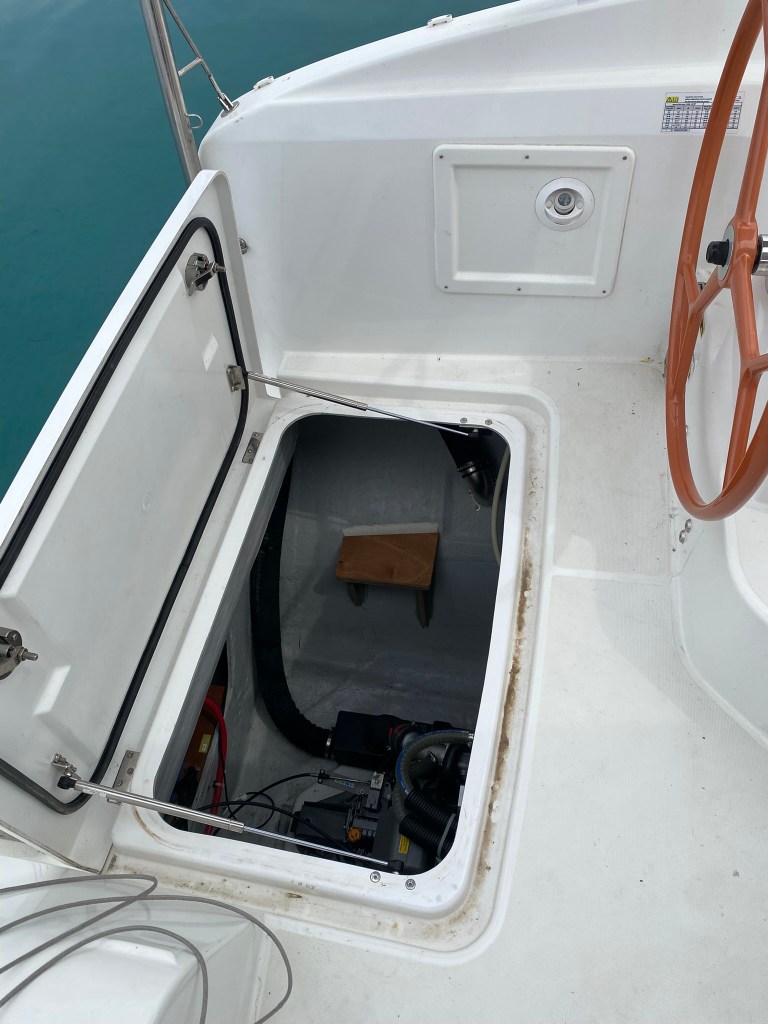
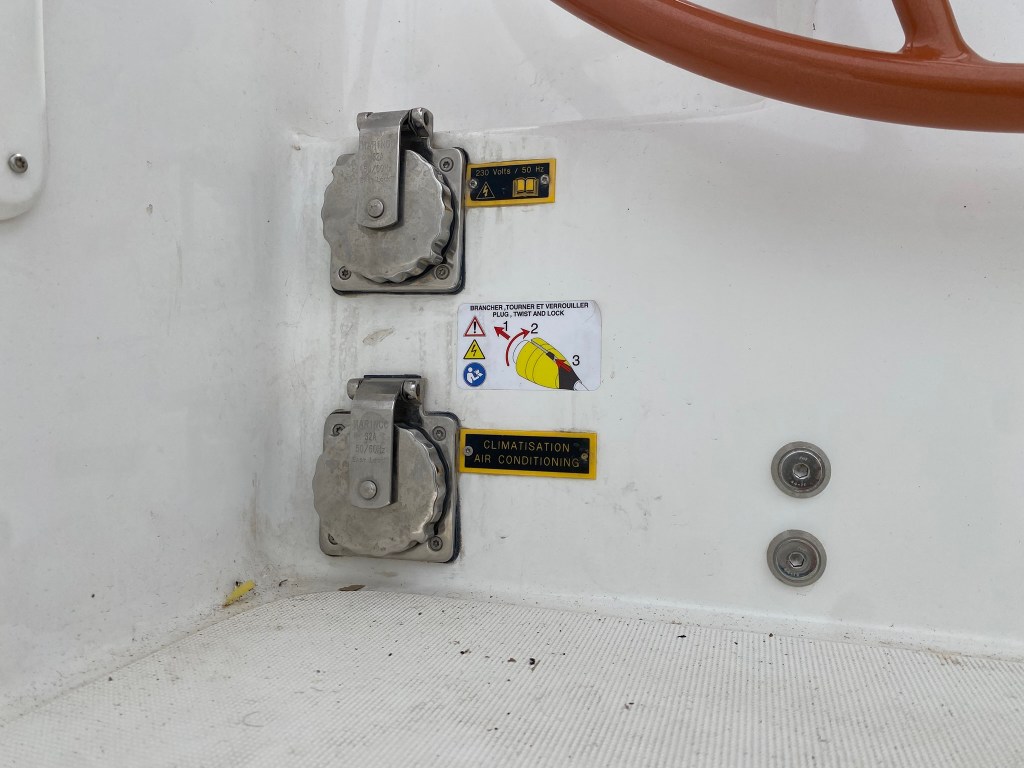
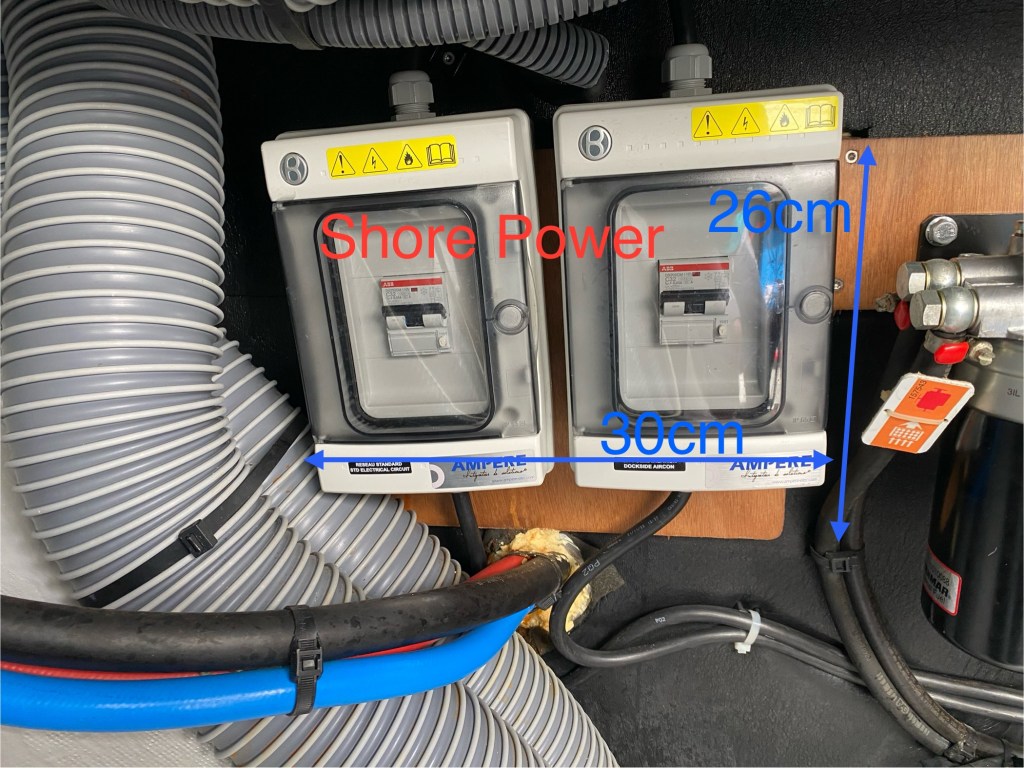
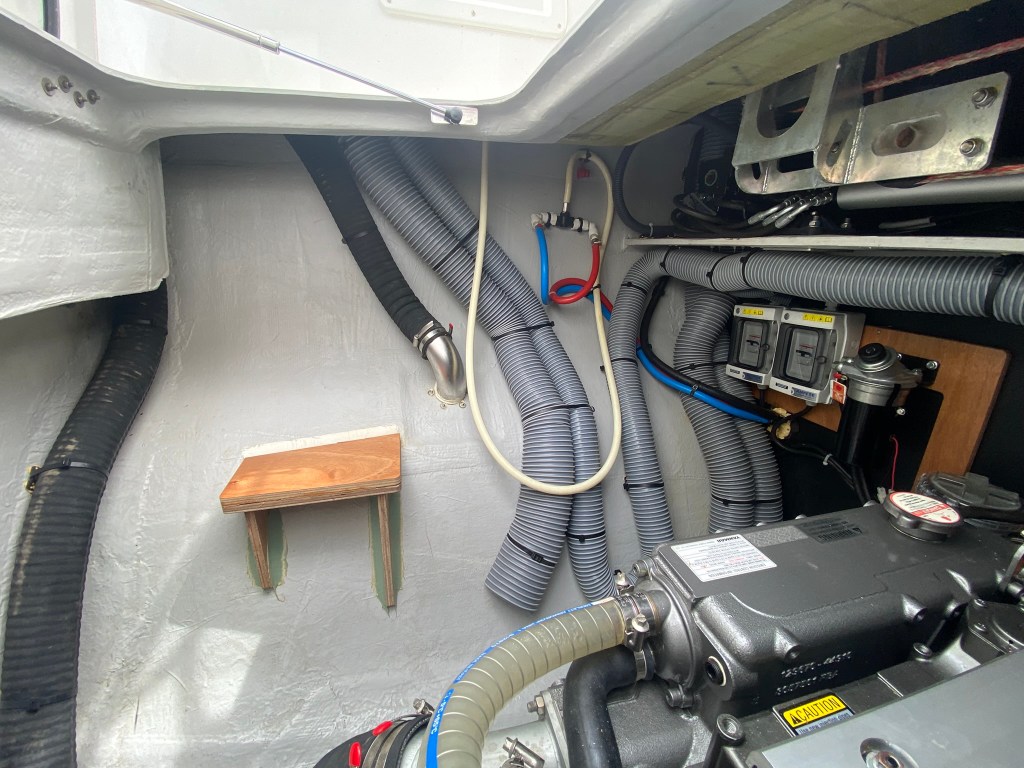
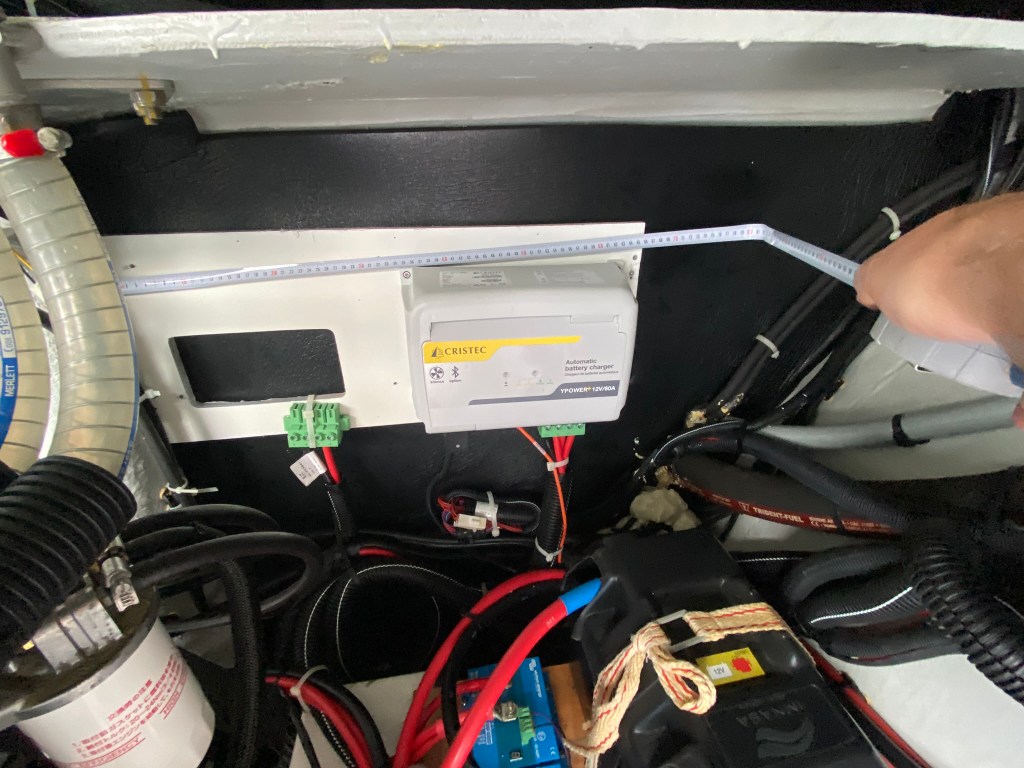
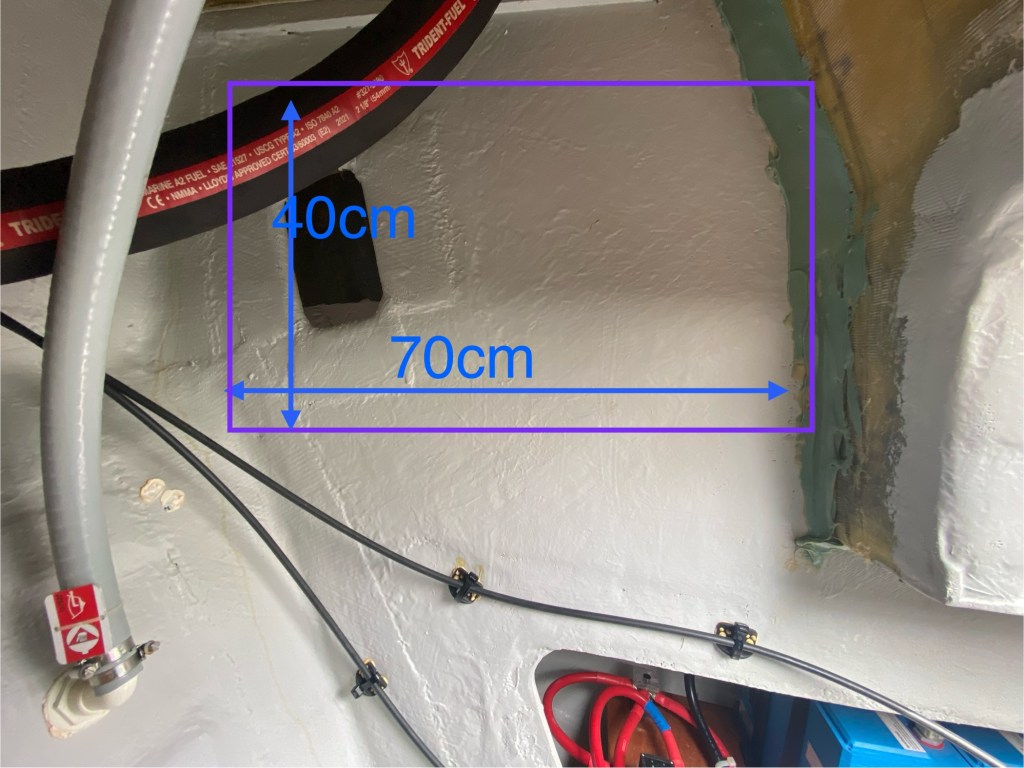
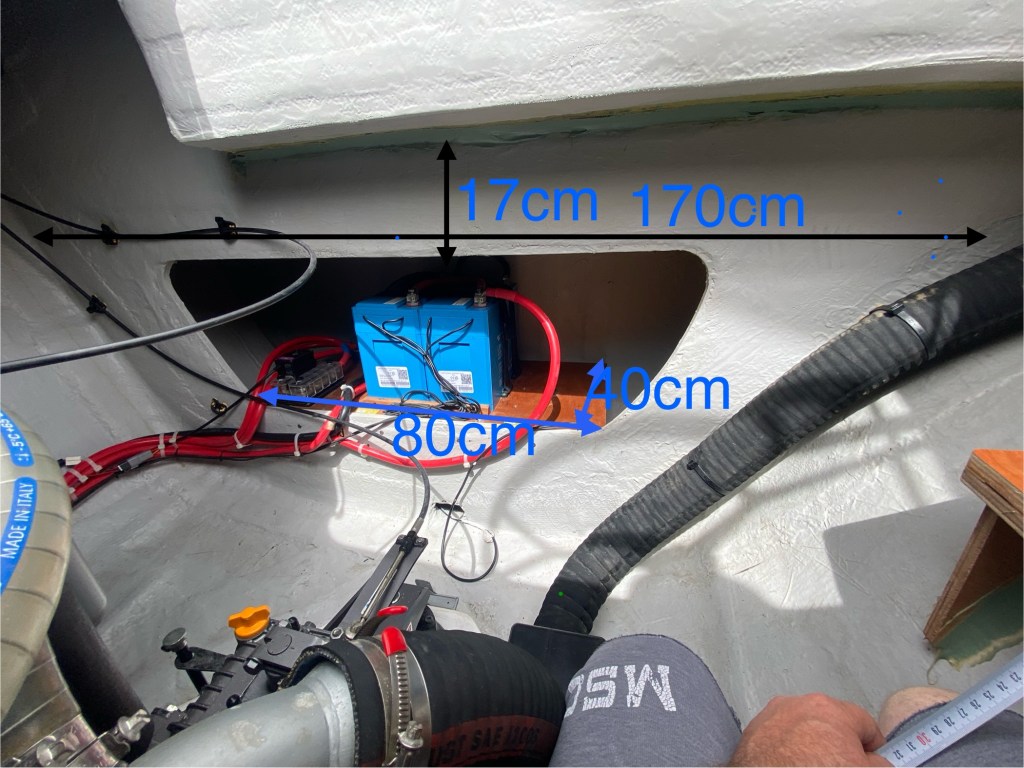

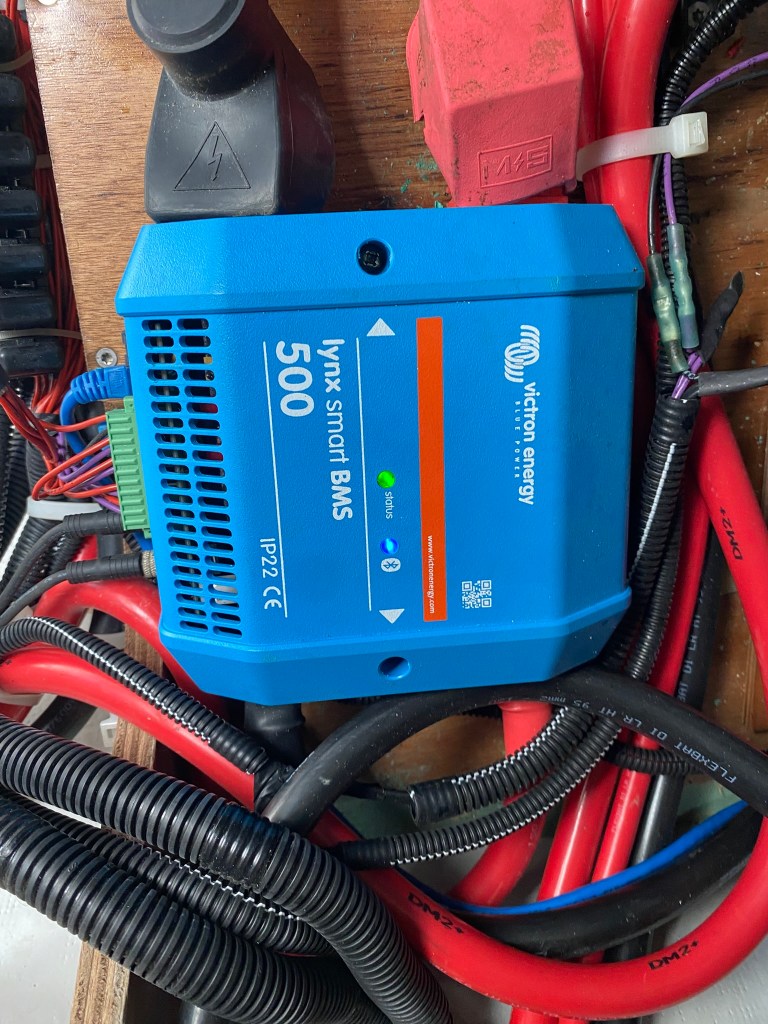
Port Engine Compartment Expansion Options
- Above left of the batteries: 40cm x 70cm
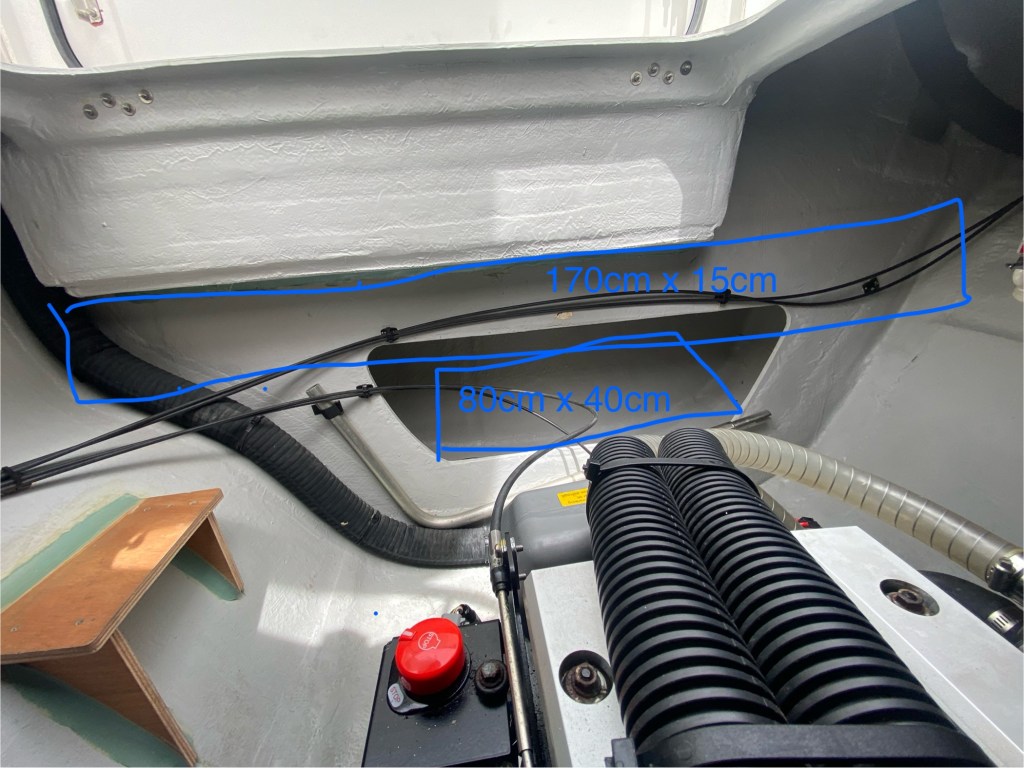
- Above the battery bay, several MPPTs could likely be mounted in the 17cm x 170cm space.
- Above the step is also a possibility, but I’d prefer to leave this clear to not anciently stick a foot into something that might go poof.
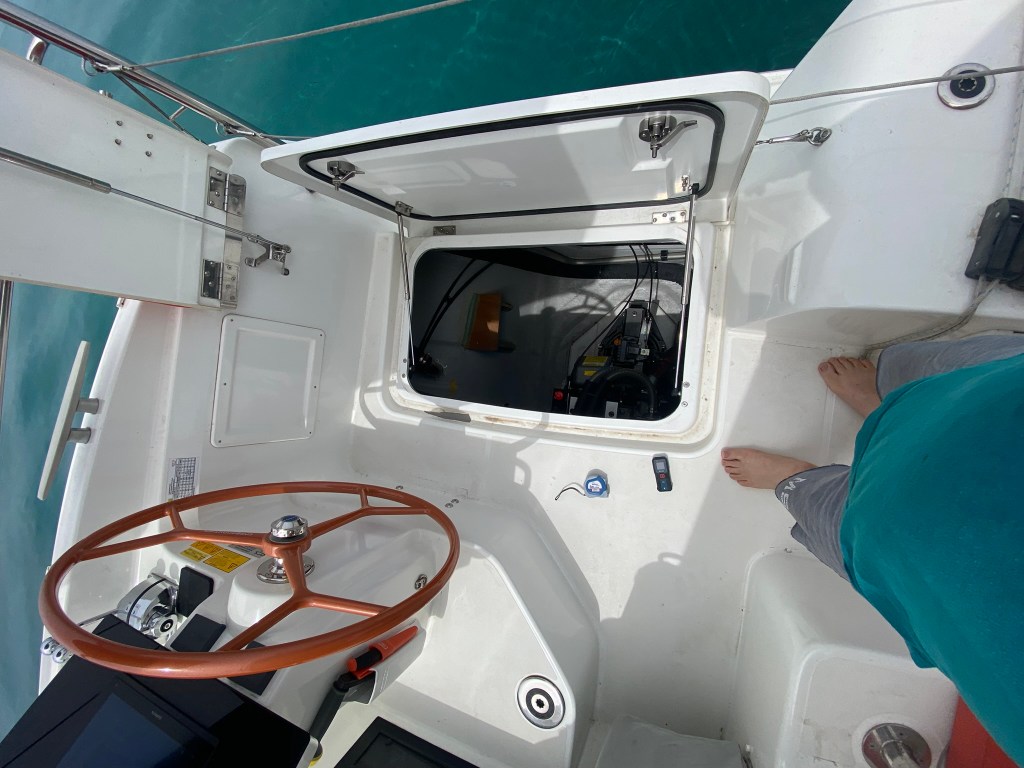
Starboard Engine Compartment
Currently, the starboard hull has minimal systems related to energy. It does contain the water pump/tank.
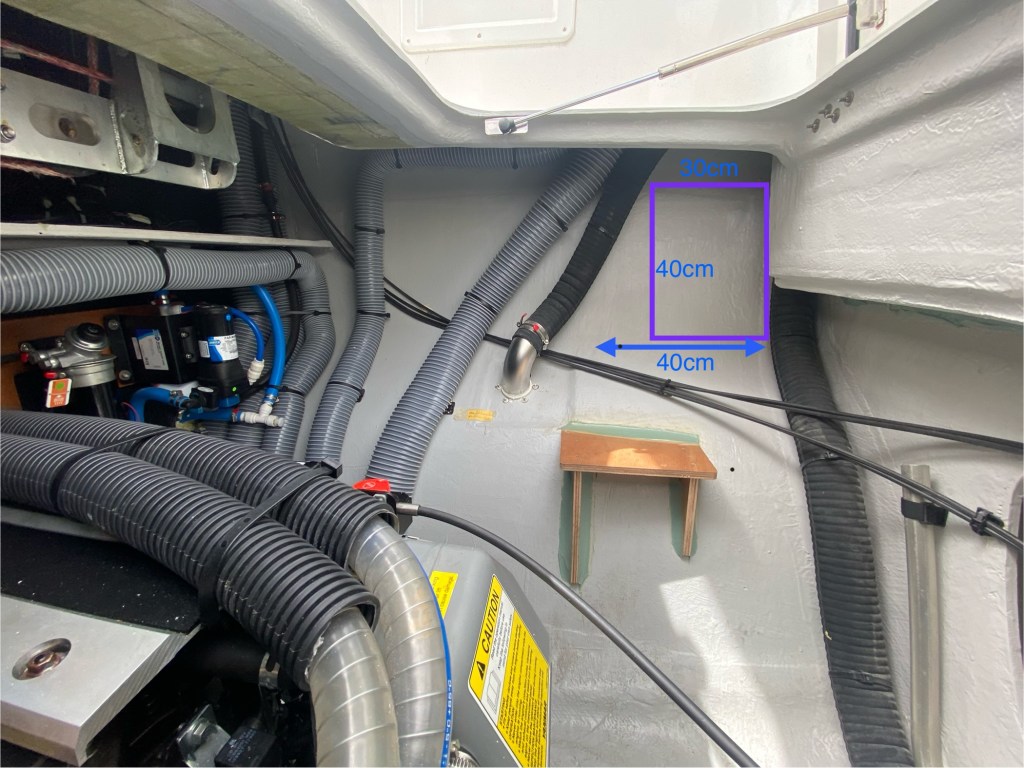
Starboard Expansion Options
- Above the step: 30cm x 40cm, which could be tucked up enough to avoid stepping into it
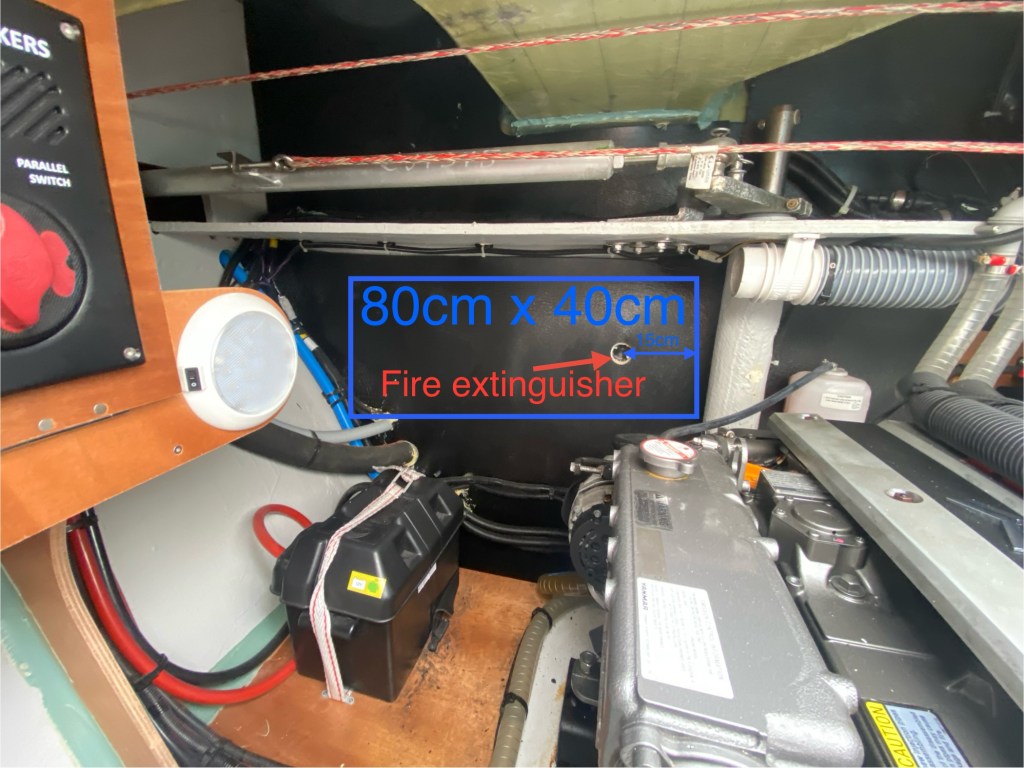
- On the forward bulkhead: 80cm x 40cm, with some space needed to account for the fire extinguisher access hole. The hole is 15cm from the edge, which might account for some electronics or wiring.
- Around the battery, similar to the Port compartment
- To the starboard of the engine is full with the water pump/tank.
- The charger for the Starboard side is under the starboard bed.
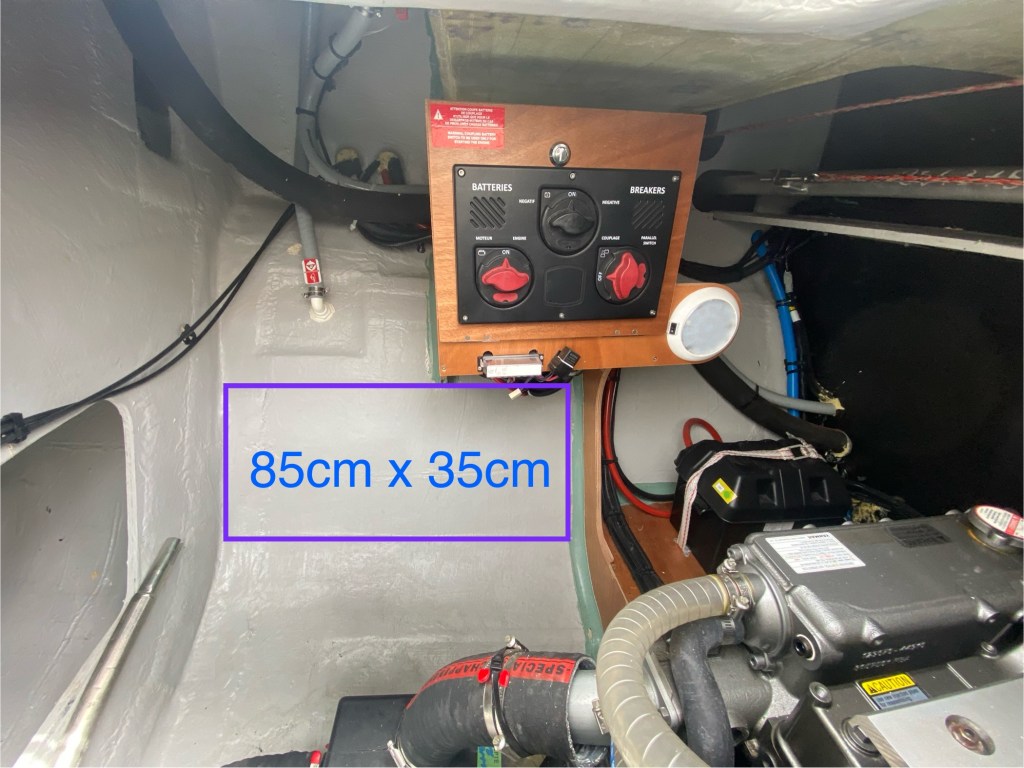
- Below the battery switch: 85cm x 35cm
- Stern compartment: similar to the Port compartment, a plywood shelf could support 40cm x 80cm (or more if tucked behind the walls)
- Above the stern compartment can fit 15cm x 170cm of “stuff”

Port Berth Bed Compartment
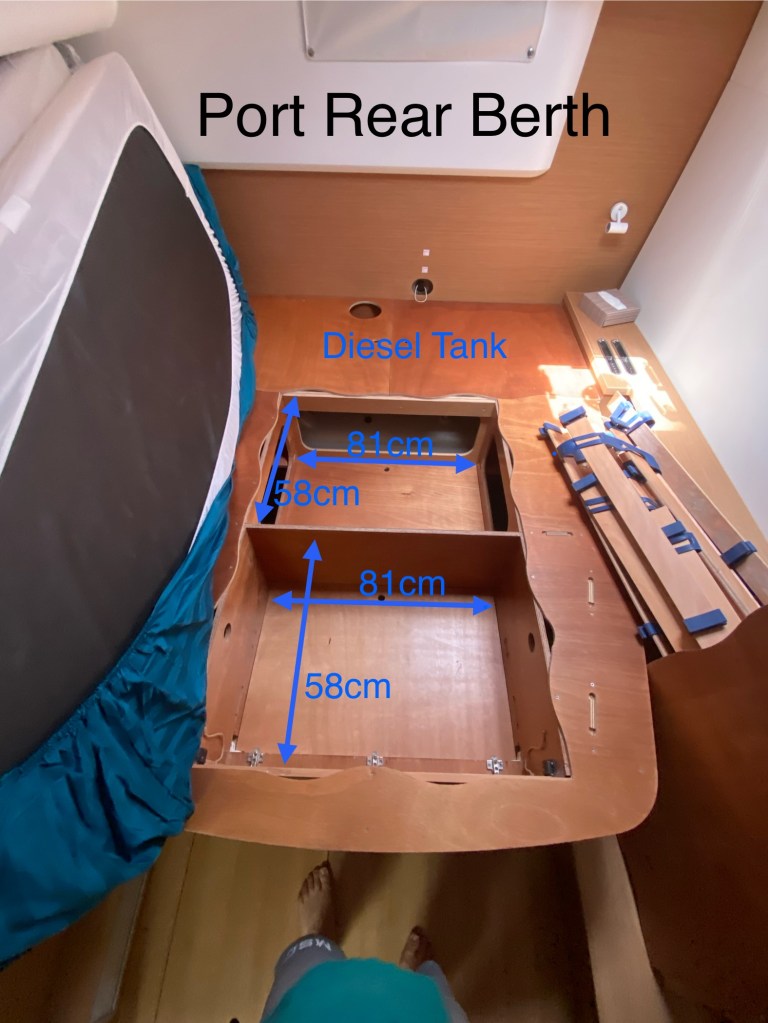
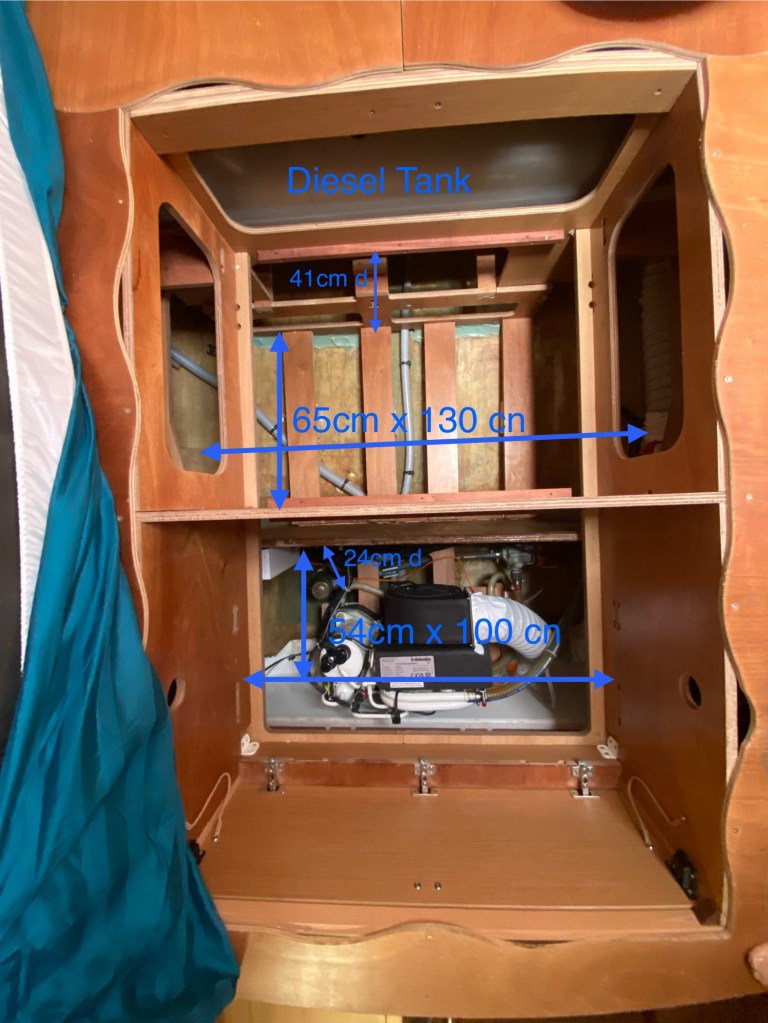
There are two levels of storage. The top forward is accessible through a drop/down door under the front of the bed, and great for guest luggage. The top aft storage requires the mattress to be lifted, which is further complicated with the bedding slats.
The lower level houses the HVAC for the hull. While the aft storage is reinforced for additional batteries.
The choice of placing the batteries a bit forward is nice, but also “balanced” with putting lithium batteries under a bed. They can heat up, they can do very bad things. I’m on the fence to keep the weight a bit rear and behind a bulkhead of protection.
Port Hull Electrical Compartment
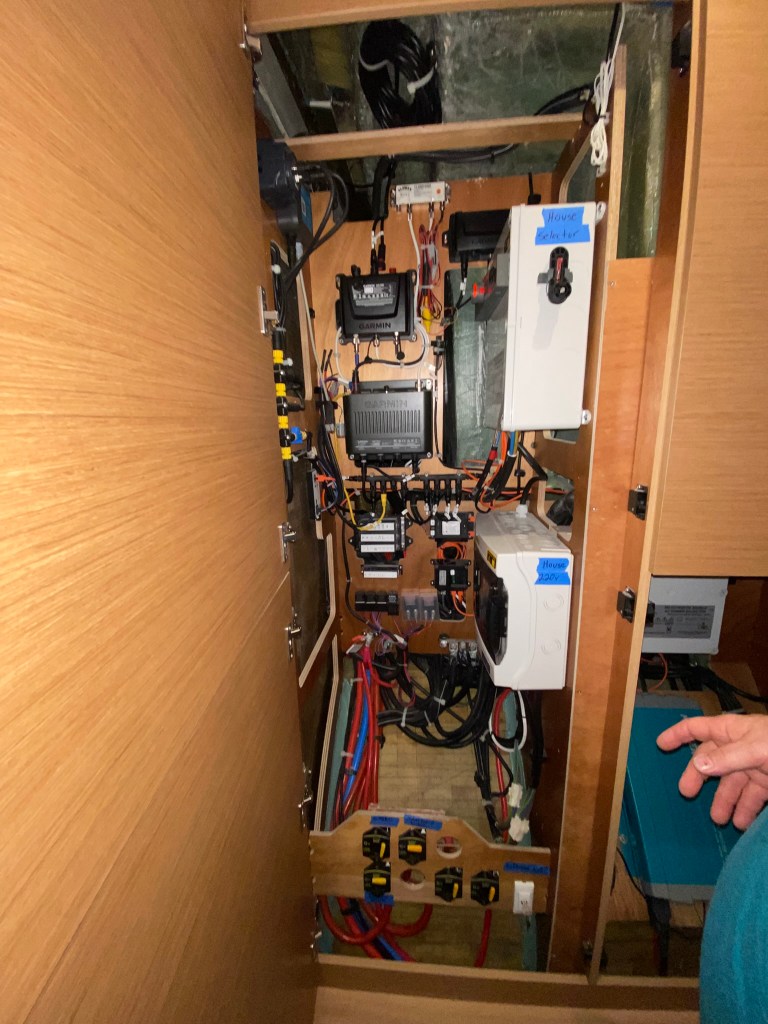
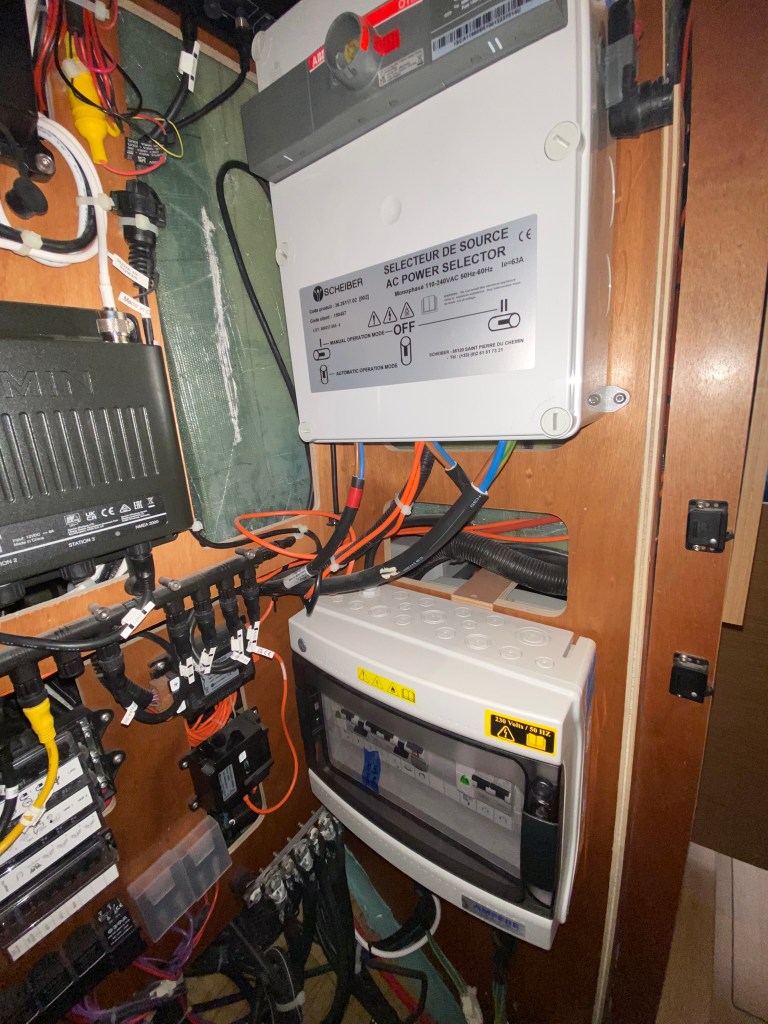
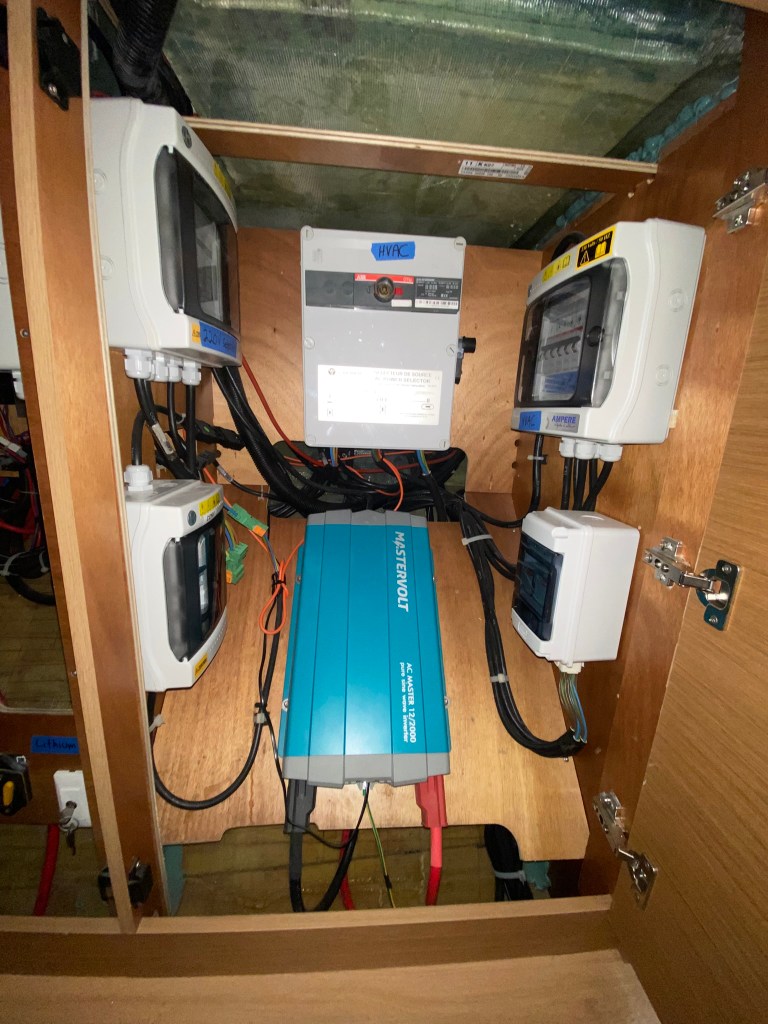
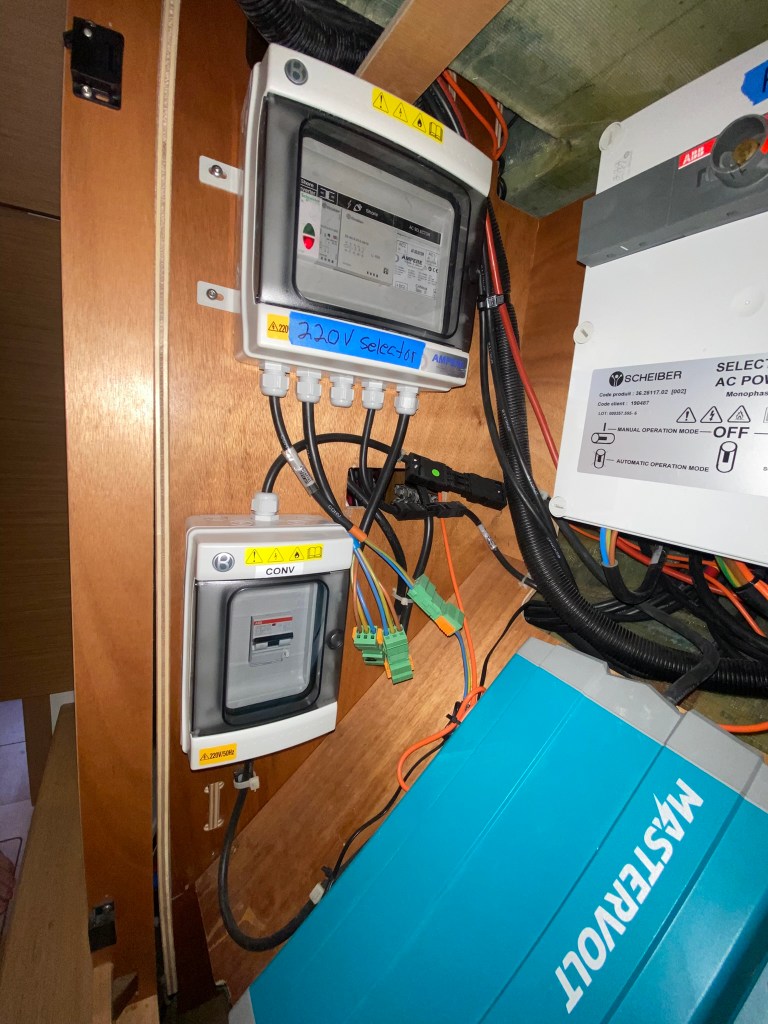
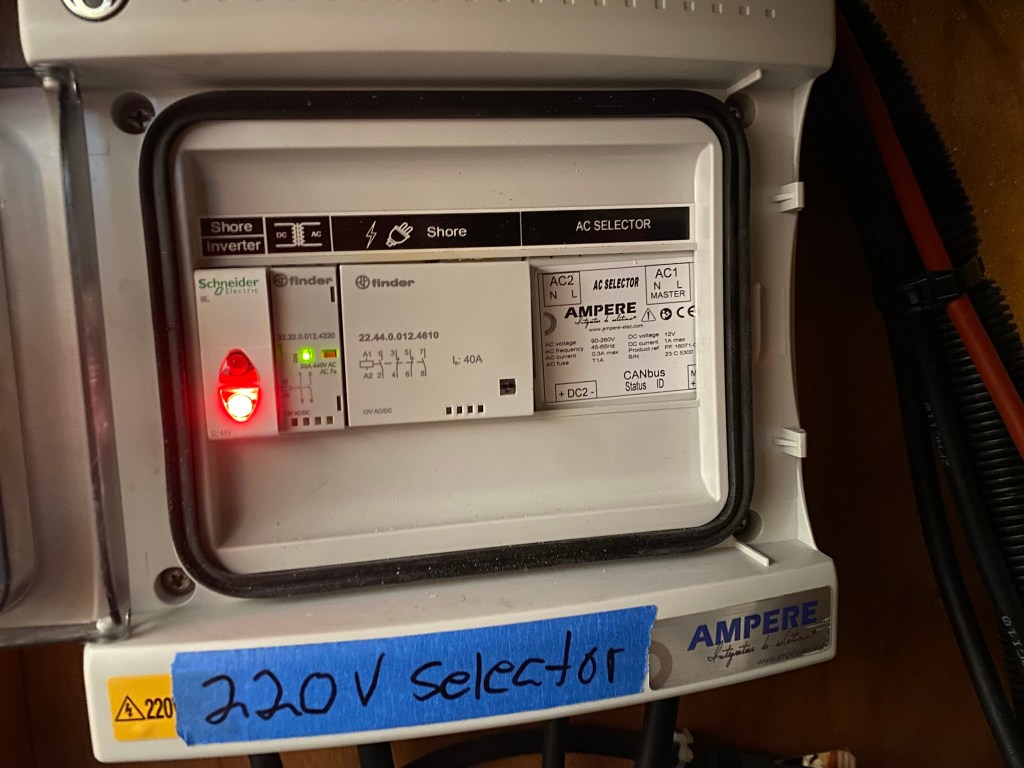
Here’ the heart of the boat electrical systems. The factory setup includes:
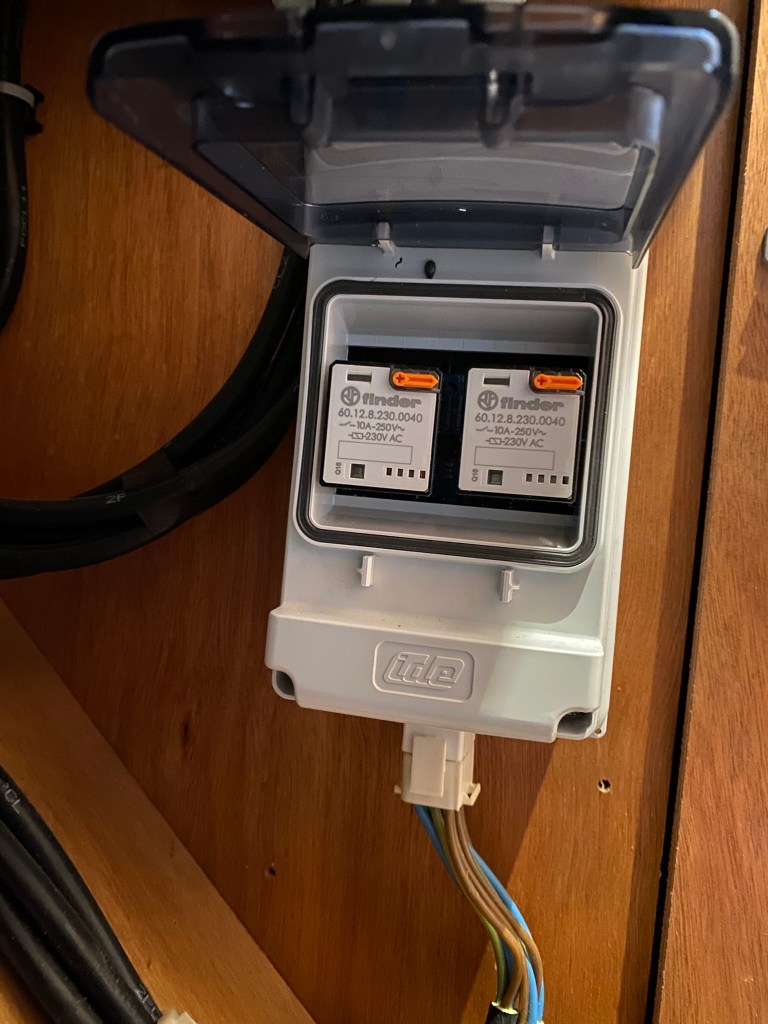
- (2) remote controlled AC switching controllers. These are controlled by the Scheiber Multifunction Panel – which is a minimal setup we’ll look to change to a Victron Cerbo GX Mark 2 and FX Touch/Flush 50. The 70 is nice, but it doesn’t fit in the is existing space. So, we’ll go with the smaller screen and use a computer, or iPad to get more control.
- (1) 12 slot 230 circuit panel for the house AC systems
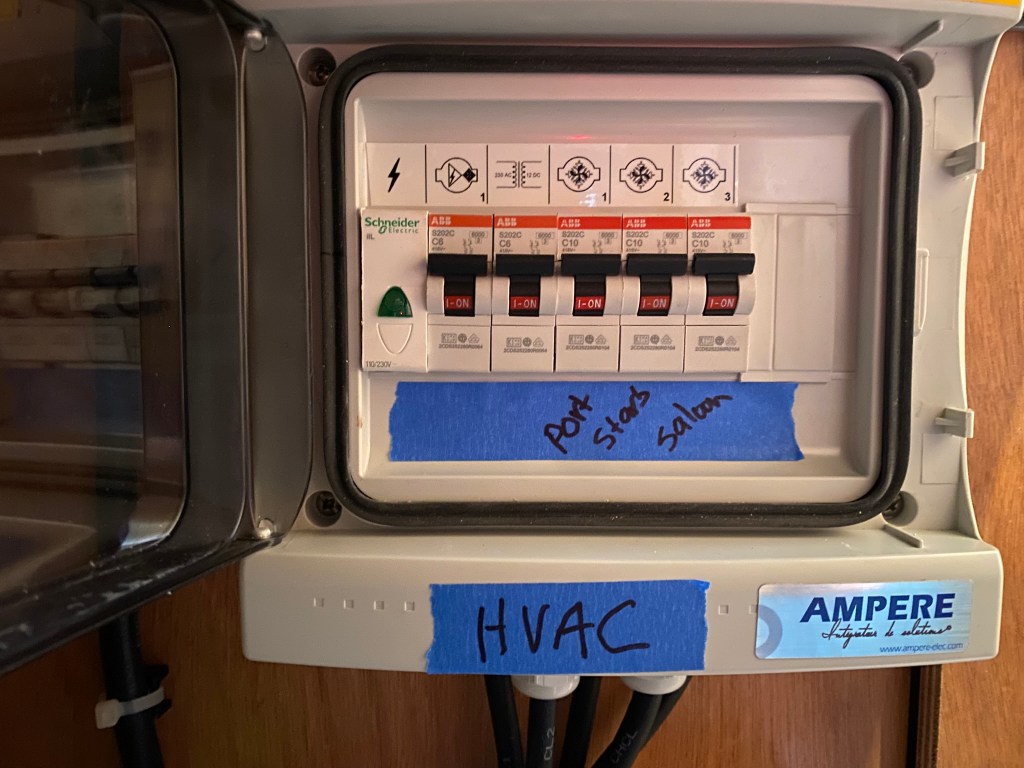
- (1) 8 slot 320 circuit panel for the (3) HVAC systems
- (1) Mastervolt 12v / 2kw inverter – which is enough to run some outlets for a laptop, the Starlink (will be switched to DC) and the coffee grinder. It’s not enough to run an electrical kettle. The only question we have is whether to keep the Mastervolt inverter as a backup, or replace it with a set of Victron inverters that can be synched and keep things “simple”.
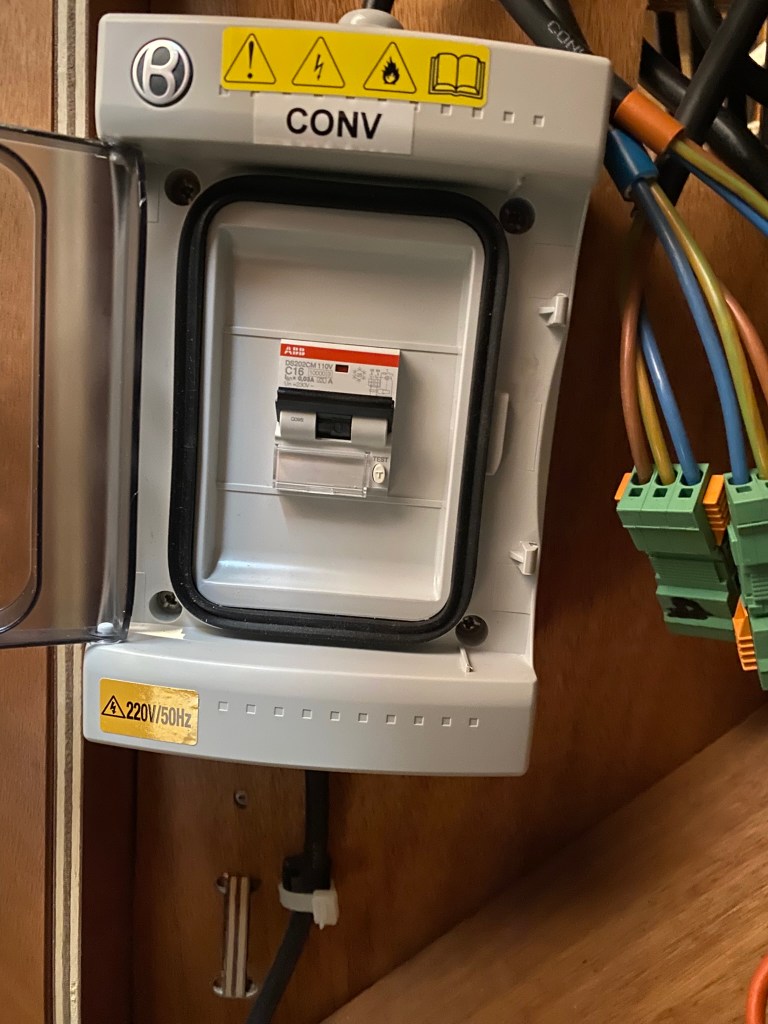
- (1) Conv panel to protect the inverter
- I suspect we’d move the inverter to the engine compartment, to keep all the DC/AC equipment in one place, then just run AC into this cabinet.
- There’s additional navigation equipment, including the VHF, AIS and systems monitoring equipment.

Coach Rooftop Solar
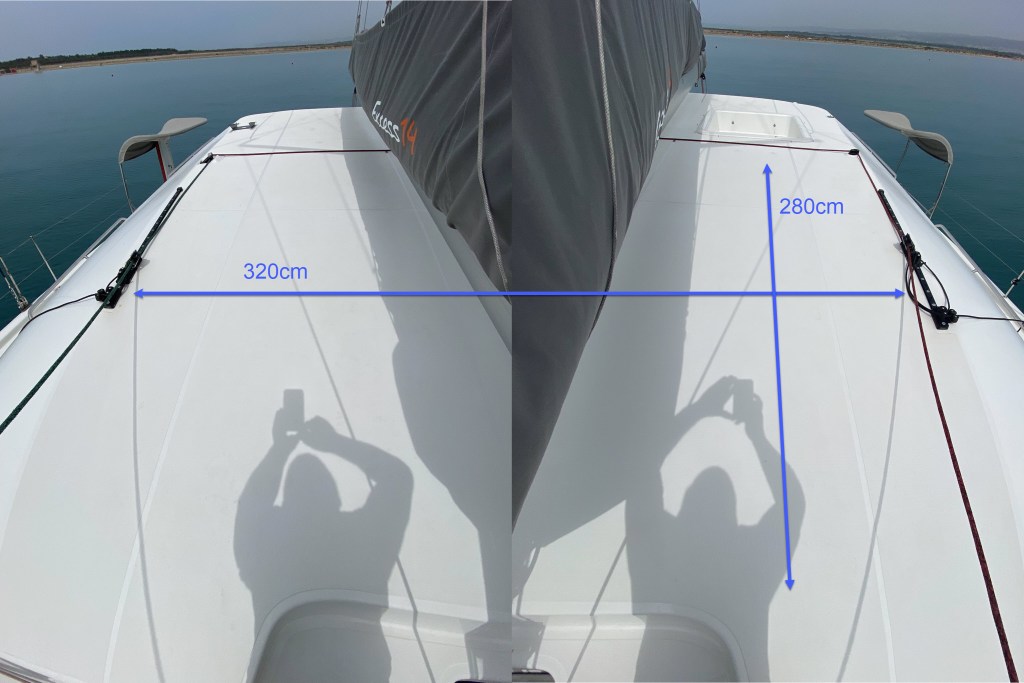
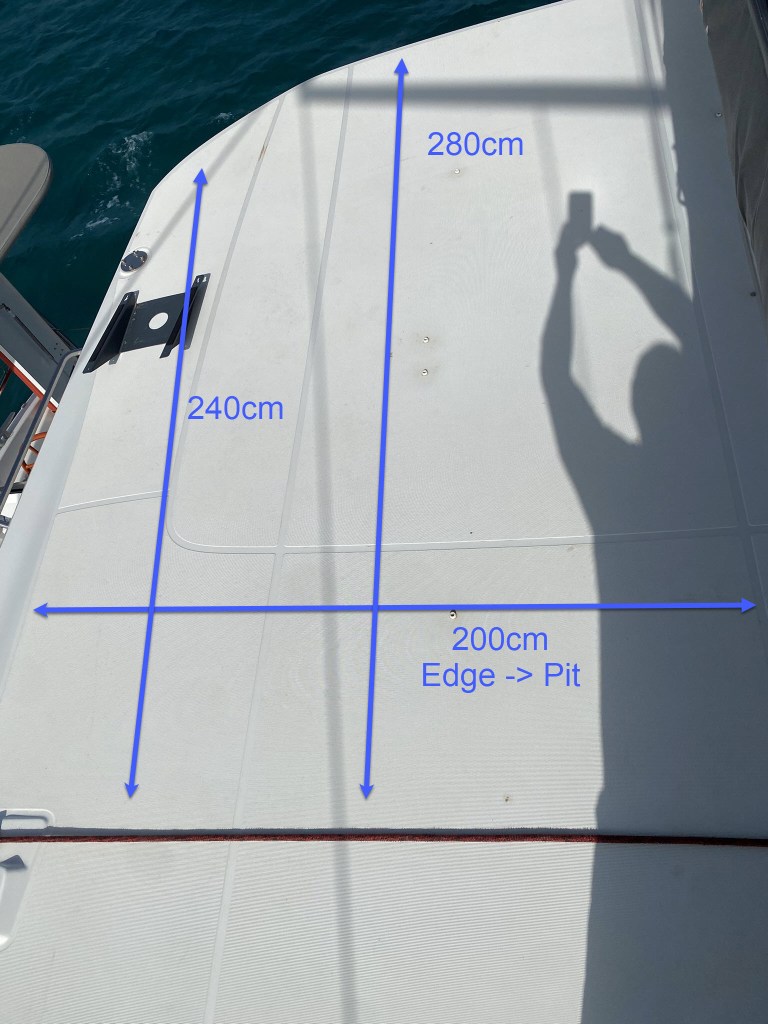
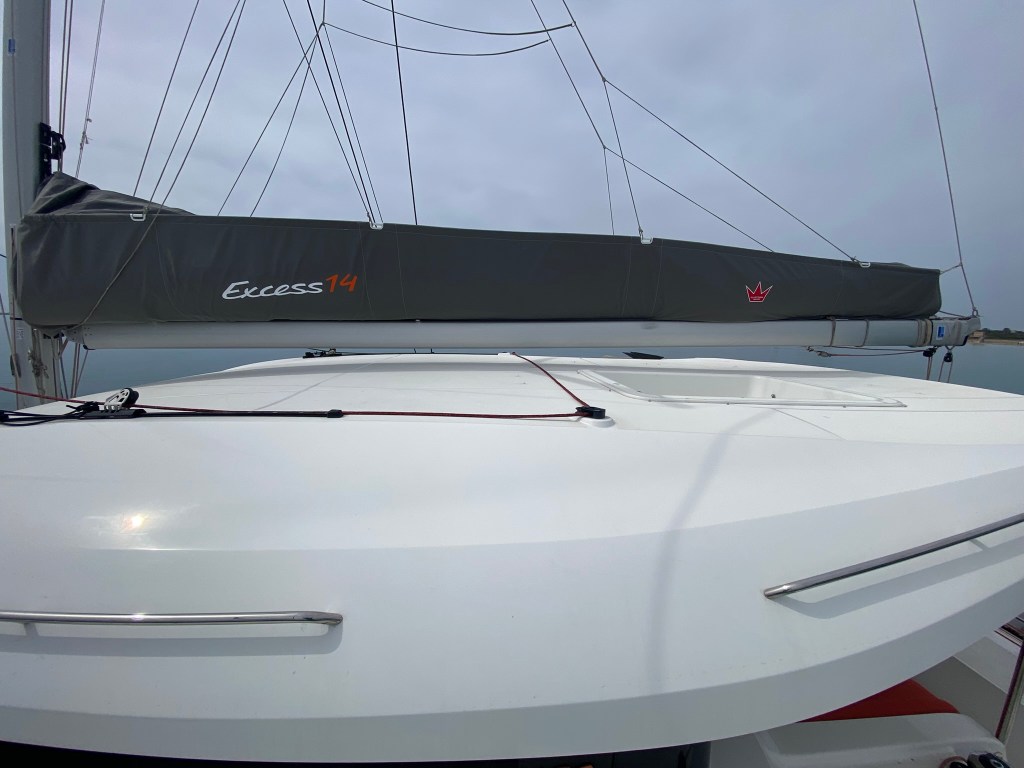
The coach rooftop of the Excess 14 is quite large. Even with the bucket for rooftop sitting, or rooftop garden, there’s still plenty of room. We estimated 2,200kw of solar capacity.
The challenge has been, getting panels with bottom entry wiring. We really want to avoid tripping on the cables, or catching a reef line that rips the panels off like a fly.
This requires more detailed measurements, however this is what we could accomplish while afloat. It’s basic measurements to get a sense what we need to work around, such as the port jib sheet that crosses the coach roof. And, how much solar KW we can fit.
What’s Next
We need to make some final decisions on how we’ll expand to meet our goals. Our Onan 7kw Genset should be installed the week of May 12th, but then what? What will it charge? How much battery storage, and at what voltage? What are our solar options, as we want to route the solar panels under the roof, to keep a safe, obstruction free surface for tending to the main.
Stay tuned, more to come…
 Hull Yeah!